The Report China Blocked: Xi Jinping's Family Millions and the Life Behind the Curtain
In 2012 Bloomberg traced millions in assets held by Xi Jinping's extended family — while stressing no wrongdoing by Xi himself — and China blocked the story. His daughter studied at Harvard under another name. What the record actually shows.
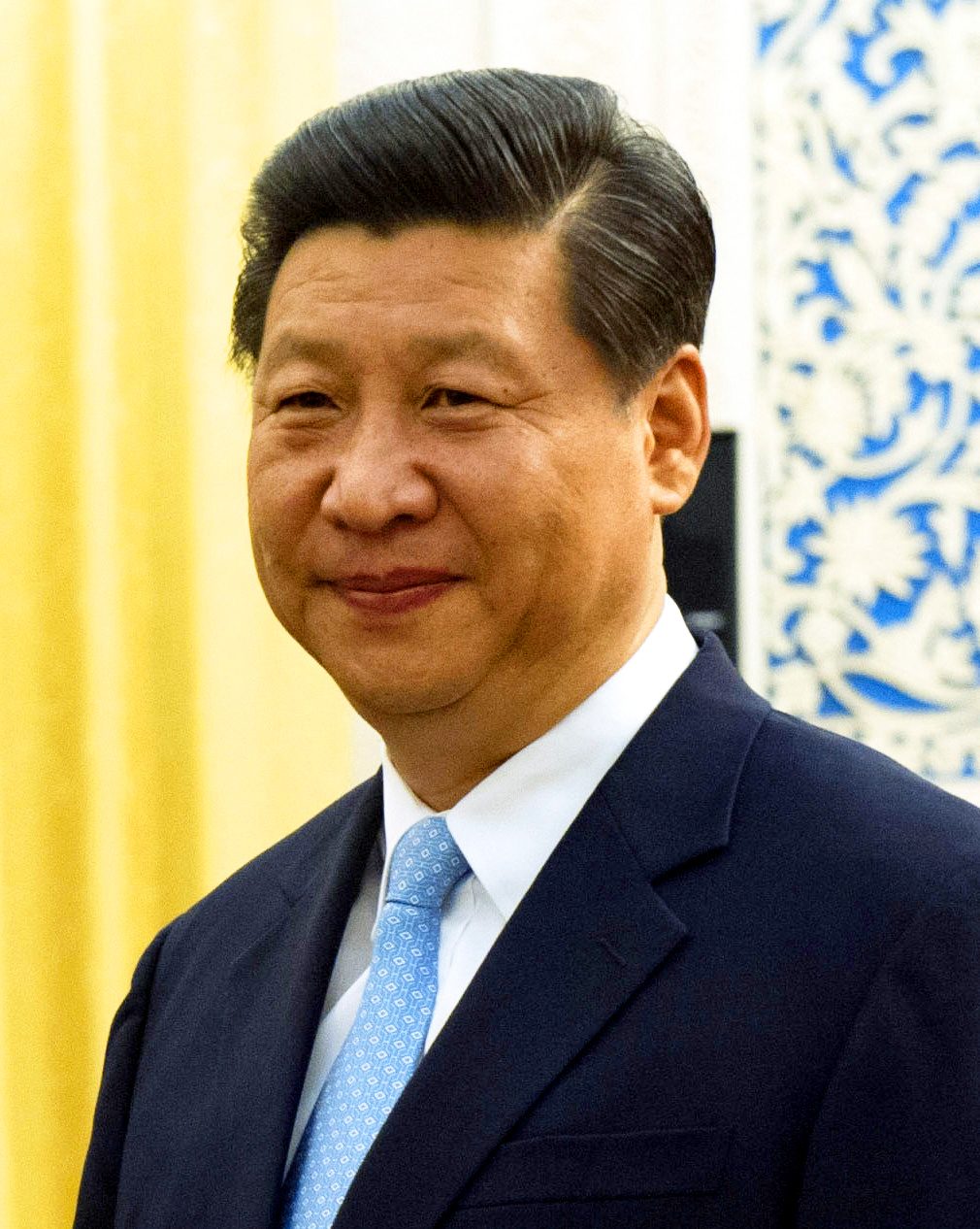
Xi Jinping presents himself to China as a man of modest habits shaped by hardship. Behind that image sits one of the most sensitive subjects in Chinese politics: the money, privacy and mythology surrounding the first family. In 2012, a single investigation into his relatives' wealth was enough to get a global news organisation blocked in China. His daughter studied in the United States under another name. And the official story of his youth has become a founding legend. Here, the evidence matters as much as the intrigue — because the most explosive report of all was careful to accuse Xi of nothing.
The investigation Beijing tried to erase
On June 29, 2012, months before Xi took power, Bloomberg News published an investigation into the business interests of his extended family, compiled from public documents. It reported that as Xi climbed the Communist Party ranks, his relatives had expanded into minerals, real estate and mobile-phone equipment. The holdings it traced included investments in companies with total assets of $376 million, an 18 percent indirect stake in a rare-earths company with $1.73 billion in assets, and a $20.2 million holding in a publicly traded technology company. Most of the assets belonged, Bloomberg found, to Xi's older sister Qi Qiaoqiao, her husband Deng Jiagui and her daughter Zhang Yannan.
The report's limits were stated in its own text. The figures counted assets, not net worth, and took no account of debts. No assets were traced to Xi himself, to his wife Peng Liyuan or to their daughter. Bloomberg said there was no indication that Xi had intervened to advance his relatives' business dealings, or of any wrongdoing by Xi or his extended family. This from a leader who, on a 2004 anti-corruption call, had warned officials to rein in their spouses, children and relatives and to vow never to use power for personal gain.
China's response was swift. Bloomberg's news websites were blocked on the mainland, and a Bloomberg spokeswoman said the company believed the blocking was a reaction to the story. Searches touching on the family's finances were censored. The episode set the boundary that still governs coverage of China's first family: the wealth of the elite is a forbidden topic.
A daughter at Harvard, under another name
Xi's only child, Xi Mingze, grew up almost entirely out of public view — a striking contrast with her mother, Peng Liyuan, a famous folk singer who was a household name in China long before her husband ruled it.
After a year at Zhejiang University, Xi Mingze enrolled at Harvard University in 2010, while her father was China's vice president. The New Yorker reported that she studied psychology and English, lived under an assumed name and kept so low a profile that her identity was known to only a handful of faculty and close friends — fewer than ten people, according to a Japanese correspondent who covered her graduation. She completed her degree in 2014 and returned to China. Little about her life since — her work, her home, her views — has been reliably documented, and she holds no known public role. In a system where leaders' children have often become princeling celebrities or business figures, the first daughter's invisibility is itself a political choice.
The cave, the cartoon bear and the making of a myth
The one chapter of Xi's life the state tells in loving detail is his youth. His father, the revolutionary veteran Xi Zhongxun, was purged and persecuted, and in 1969 the 15-year-old Xi was sent from Beijing to Liangjiahe, a poor village in Shaanxi province, as one of millions of "sent-down" urban youths during the Cultural Revolution. By the official biography he has often retold, he spent about seven years there doing farm labour and living in a cave dwelling, joined the Communist Party after repeated applications and became the village's party branch secretary. Liangjiahe is now a place of pilgrimage, and the cave years serve as the founding story of his rule: proof, in the official telling, that he understands ordinary Chinese lives.
What the state cannot script is ridicule. From 2013, internet users began comparing Xi's appearance to Winnie the Pooh, pairing a photograph of Xi walking with U.S. President Barack Obama with an image of Pooh beside Tigger. In July 2017, the BBC reported that the character's Chinese name and many Pooh images were being blocked on Chinese social media, as censors moved against a comparison they feared was becoming a coded euphemism for the leader. It was never a ban on the bear himself, whose books and merchandise remained on sale — only on the joke.
Together, the three stories describe the architecture of secrecy around China's leader: documented family wealth that may not be discussed, a daughter the public is not meant to see, and a biography polished into myth while even a cartoon comparison is policed.