The Chairman Who Asked to Be Cremated and Got a Mausoleum
Mao Zedong signed a pledge in 1956 asking to be cremated. Twenty years later his successors embalmed him instead. His doctor's memoir opened a window on the secretive court of Zhongnanhai - Beijing says much of it is invention.
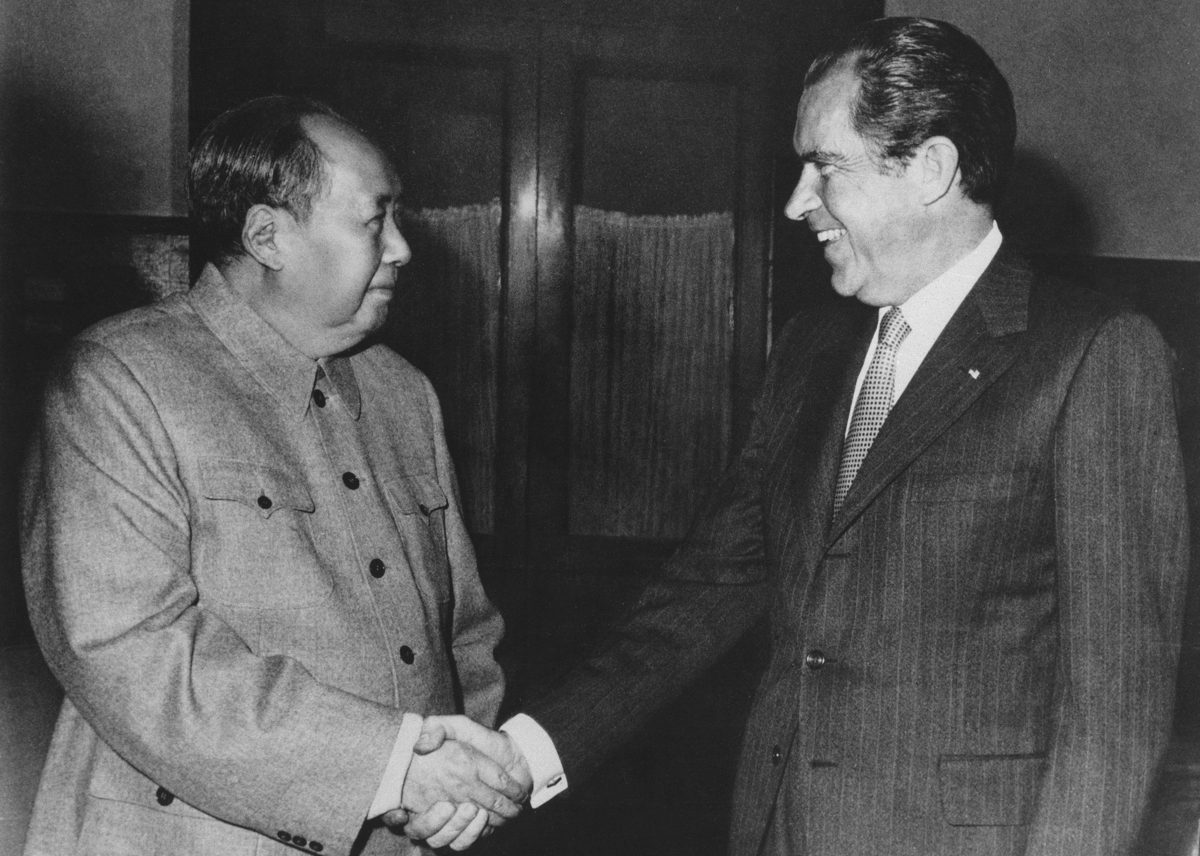
Mao Zedong spent his last decades sealed inside Zhongnanhai, the lakeside compound beside Beijing's Forbidden City, where his health, his habits and his household were state secrets. The fullest account of that hidden life comes from a single witness: Li Zhisui, his personal physician for 22 years, whose 1994 memoir, The Private Life of Chairman Mao, described the Chairman from the bedside - his illnesses, his insomnia, his hygiene, his courtiers. Beijing banned the book and denounced it as fabrication; other former aides published rebuttals, and historians treat some of its details with caution. But the memoir's frame is corroborated by the documentary record, and the record contains one irony no one disputes. In 1956 Mao was the first senior leader to sign a pledge asking that he be cremated. In 1977 his embalmed body went on display in Tiananmen Square, where it lies today.
The doctor's notebook
Li, who served Mao from 1954 until his death, depicts a ruler who worked from his bed or beside the indoor pool built for him in Zhongnanhai, kept nocturnal hours, and summoned ministers in the middle of the night. According to Li, Mao refused to brush his teeth, rinsing his mouth with tea instead; suffered chronic insomnia managed with sleeping pills; and chain-smoked even as his lungs failed. Whether every such detail is exact, the direction of travel is documented: secrecy tightened as his health collapsed. Li records that doctors diagnosed a motor neurone disease in the 1970s; cataracts were removed in 1975; and in his final phase a young attendant, Zhang Yufeng, became his indispensable intermediary, reading documents aloud and interpreting his slurred words for the leadership. His heart attacks in 1976 were concealed from the public until his death on 9 September, at the age of 82, officially of a heart attack. For a population ordered to worship the Chairman's vigour, his body had become the state's most closely guarded secret.
A swim as a political weapon
Ten years earlier, that body had been his loudest political instrument. Mao had withdrawn from public view for months in 1965 and 1966, as colleagues who had sidelined him after the Great Leap famine consolidated their position. On 16 July 1966 he re-emerged at Wuhan, joining thousands of swimmers in the annual Yangtze River crossing. State media announced that the 72-year-old Chairman had covered nearly 15 kilometres in 65 minutes, floating on his back and chatting as he went - a pace faster than the world record for the distance, as foreign newspapers pointed out with open scepticism at the time. Historians treat the swim as choreography: a demonstration of vigour aimed at the party and at China's youth, and the starting gun for the mass phase of the Cultural Revolution, in which Mao's supporters assaulted the very officials who had marginalised him. Posters, a film and annual commemorative swims recycled the morning for a decade, one element in a cult that also put his Little Red Book in every pocket and his portrait on every wall.
The pledge and the crystal coffin
In November 1956, Mao had led his senior colleagues in signing a proposal that all central leaders be cremated after death - a deliberate break with burial tradition, meant to save farmland and stamp out superstition. Zhu De and Deng Xiaoping were among the signatories, and Mao is quoted as joking that his own ashes might as well be scattered to feed the fish. When he died twenty years later, his successors decided otherwise. Following the precedents of Lenin in Moscow and Ho Chi Minh in Hanoi, the leadership ordered the body preserved for permanent display. Li's memoir describes an improvised embalming: uncertain technicians injected so much formaldehyde that, he wrote, the Chairman's face swelled and had to be massaged back into shape. Construction of the Chairman Mao Memorial Hall began on Tiananmen Square in November 1976 and the building opened in September 1977; hundreds of thousands of volunteers from across China were mobilised to raise it in under a year, and it remains the centrepiece of the square's southern side. There the embalmed leader still lies, in a crystal coffin draped with the party flag, raised each morning for the queues of visitors - the most public afterlife imaginable for a man who had asked, in writing, for the furnace.