The Vanishing Commissars: How Stalin Edited the Past and Hid the Present
Under Stalin, people who fell from favour disappeared twice - first from life, then from photographs and encyclopedias. What historians know, and what remains guesswork, about the most secretive court in Europe.
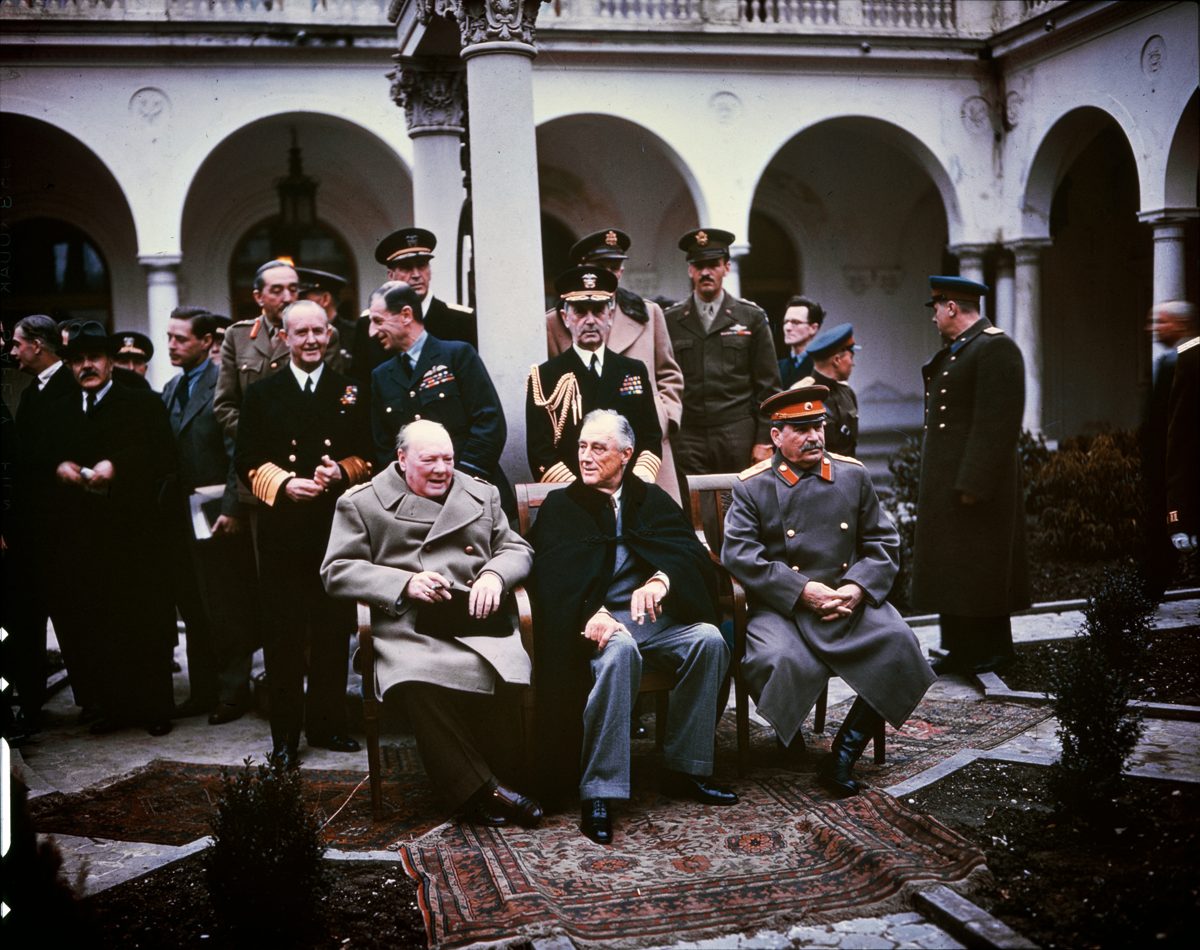
Joseph Stalin controlled not only what Soviet citizens could say about the present, but what they were permitted to remember about the past. Officials who fell from favour disappeared twice: first from life, then from the record - airbrushed out of photographs, cut out of encyclopedias. The falsification is unusually well documented, because the originals survived: in archives, in the collection assembled by the British designer David King for his 1997 book The Commissar Vanishes, and in a publisher's letter that instructed readers to take scissors to their own bookshelves. His private existence was guarded with the same rigour, and his death, in March 1953, remains the murkiest episode of the era: its outline is documented, its darkest theory is not.
Airbrushed out of history
The retouchers worked with scalpels, ink and airbrushes, and their most famous canvas is a photograph from April 1937: Stalin strolling beside the Moscow-Volga Canal with Nikolai Yezhov, the secret police chief then directing the Great Purge. After Yezhov was himself arrested and executed, in February 1940, later printings show Stalin alone beside the water; the commissar had been replaced by the canal he once administered. Leon Trotsky, exiled in 1929, was progressively removed from photographs of the revolutionary years, shrinking Lenin's platform parties one figure at a time. Retouching also flattered the leader: in the celebrated 1922 photograph of Lenin and Stalin at Gorki, specialists at the Metropolitan Museum have noted, retouchers smoothed Stalin's smallpox-pocked complexion and lengthened his withered left arm, presenting a robust heir. In 1938 the party published its Short Course history of the revolution, a textbook Stalin personally edited, which recast the past with himself at its centre and his rivals written down or out altogether.
Take scissors to page 21: the encyclopedia and the library
The falsification reached into private homes by post. After police chief Lavrentiy Beria was arrested and executed in December 1953, subscribers to the Great Soviet Encyclopedia received replacement pages from the publisher, with a letter - preserved and quoted by historians - recommending that they cut out pages 21 to 24 of volume five, which contained an admiring entry on Beria and his portrait, and glue in the enclosed substitute: an expanded article on the Bering Sea, which happened to sit in the same alphabetical neighbourhood. (Popular retellings sometimes attach the episode to Yezhov; the documented letter concerned Beria.) The private Stalin, meanwhile, left a subtler archive. The historian Geoffrey Roberts, drawing on Russian state archives for his book Stalin's Library, estimates the dictator's collection at some 25,000 items by his death; archivists preserved about 5,500 identifiable volumes, nearly 500 of them bearing his markings, or pometki. Most are underlinings and the letters "NB"; occasionally a word escapes - "ha ha", "nonsense", "rubbish", "scumbag" - often in the margins of books by rivals such as Trotsky and Bukharin, whom he read closely. The markings show a systematic autodidact who read to learn, and who loved editing almost as much as reading.
Five days at Kuntsevo
In his last years Stalin worked increasingly from his dacha at Kuntsevo, outside Moscow, receiving a narrow circle late into the night; his Kremlin appointment logs record long hours spent with his security chiefs. On 28 February 1953, according to Nikita Khrushchev's memoirs, he watched a film and dined with Beria, Georgy Malenkov, Khrushchev and Nikolai Bulganin, retiring in the early hours. His guards, under standing orders never to disturb him, did not enter his rooms all the following day. At about 10:30 on the night of 1 March, a duty officer, Pyotr Lozgachev, finally went in and found Stalin on the floor, conscious but unable to speak or move his right side. Beria and Malenkov arrived around 3 a.m.; by Lozgachev's later testimony, Beria declared that the leader was sleeping soundly and forbade panic. Doctors were summoned only at about 7 a.m. on 2 March, and diagnosed a cerebral haemorrhage. Stalin died at 9:50 p.m. on 5 March, aged 74 - weeks after the so-called Doctors' Plot had swept up his own physicians in arrests. Was he murdered? In 2003 the historians Jonathan Brent and Vladimir Naumov argued that references to stomach haemorrhaging, cut from the released autopsy, suggested poisoning with the blood-thinner warfarin, most plausibly by Beria; Vyacheslav Molotov told an interviewer that Beria had boasted of "removing" Stalin. Most specialists regard the theory as unproven. The documented record supports a massive stroke, possibly compounded by a fatal - and perhaps deliberately slow - response. His embalmed body lay beside Lenin's until 1961, when his successors quietly carried it out: the editors of history, edited at last.