Russian warship hit by Ukrainian drone in Gulf of Finland, in first Baltic attack
Ukraine's SBU says a drone hit the Russian missile corvette Naro-Fominsk near Gogland Island on November 11, in what is thought to be the first Ukrainian attack on a Russian warship in the Baltic Sea.
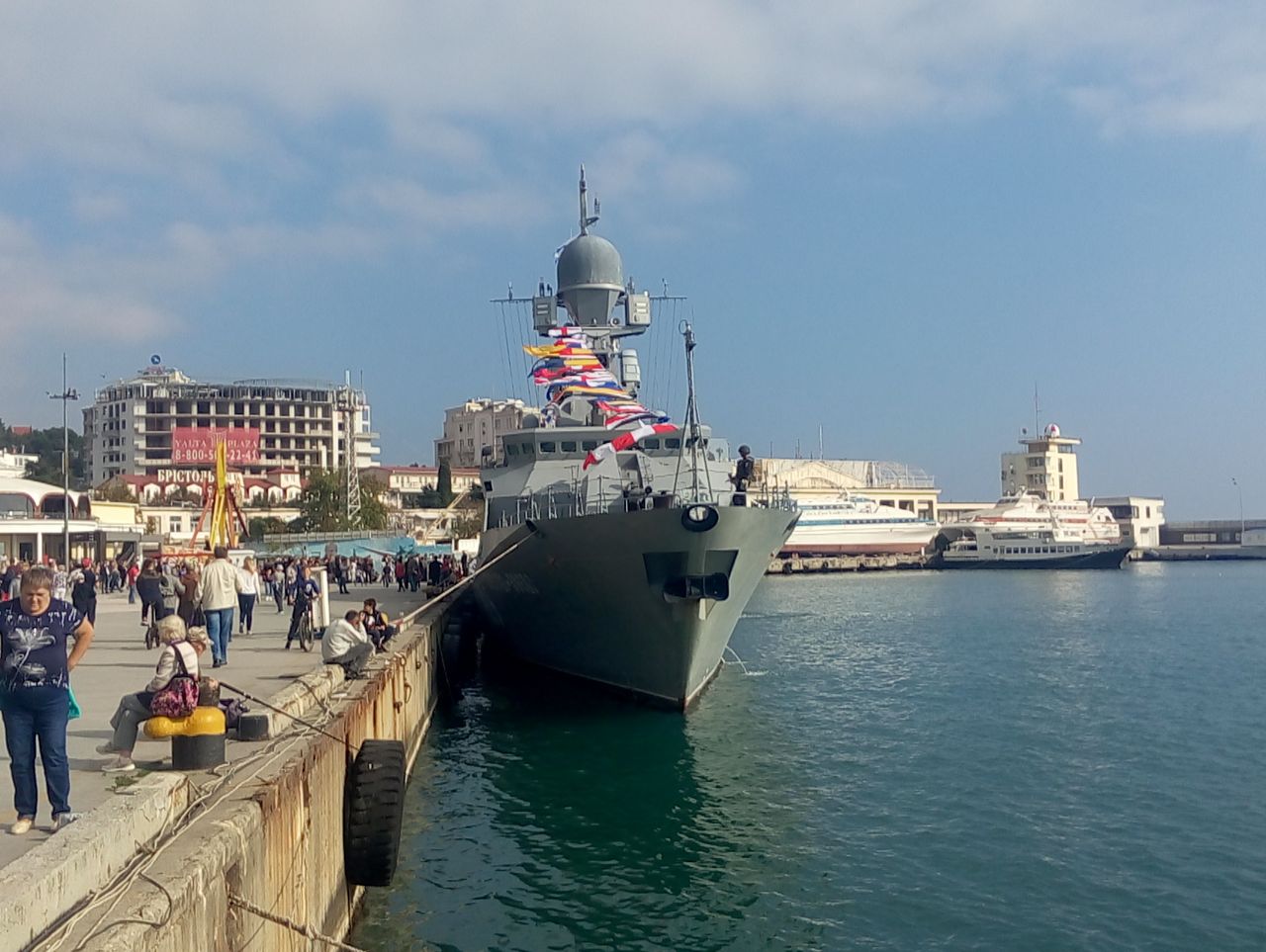
A Ukrainian drone has hit a Russian warship in the Gulf of Finland, in what is thought to be the first attack of its kind in the Baltic Sea and a striking expansion of Kyiv's long naval drone campaign far beyond the Black Sea.
Ukraine's SBU security service said it attacked the Russian missile corvette Naro-Fominsk on Wednesday, November 11, at about 05:30 local time. The strike formed part of a broader overnight drone operation against Russia's Ust-Luga oil export terminal on the Baltic coast, which ran from around midnight until about 06:00.
The attack took place near Gogland Island, roughly 40km from Finland and 55km from Estonia — and nearly 1,000km from Ukrainian territory. Estonia's defence minister, Martin Herem, told the broadcaster ERR that an explosion hit the ship at about 05:30, after which it was seen smoking and heading back toward St Petersburg under its own power. Finnish officials confirmed that an attack had been detected.
What happened in the Gulf of Finland
The SBU described the Naro-Fominsk as a Buyan-M class small missile ship — Project 21631 in Russian designation — about 74 metres long and commissioned in December 2023. Ships of this type are compact but heavily armed for their size, and the SBU said this one was carrying Kalibr and Oniks cruise missiles, weapons that Russia has used extensively in long-range strikes during the war.
The wider operation was aimed at Ust-Luga, the major Russian oil export terminal on the Baltic coast. Energy infrastructure has been a central target set for both sides throughout the conflict, with export terminals, refineries and shipping all drawn into a war that reaches well behind the front lines.
The extent of the damage to the corvette, and whether there were any casualties, remains unclear. Moscow rarely comments on such details, and neither the claim of a hit nor the condition of the ship could be independently established from the statements alone. One detail, however, underlines how close the fighting came to NATO territory: one Ukrainian drone briefly entered Estonian airspace during the operation.
From the Black Sea to the Baltic
What makes the attack significant is its location. Ukraine's naval drone campaign is well established in the Black Sea, where uncrewed vessels — cheap, hard to detect and expendable — have been used repeatedly against Russia's fleet and have helped Kyiv contest waters it could not challenge with conventional warships, having lost most of its navy early in the war.
The Baltic is a different theatre entirely. It is thought to be the first time Ukrainian drones have attacked a Russian warship in an open stretch of the Baltic Sea used by civilian shipping, nearly 1,000km from Ukraine. Reaching it implies drones able to travel, or be controlled over, very long distances — and it brings the war's naval dimension into waters bordered by several NATO and EU member states, including Finland and Estonia.
The Baltic is also one of Europe's busiest shipping areas, carrying dense commercial traffic between northern European ports as well as Russian oil exports from terminals such as Ust-Luga. Military activity in such waters inevitably raises questions about safety, miscalculation and the risk that an incident draws in countries that are not parties to the war — risks illustrated by the drone that strayed, briefly, into Estonian airspace.
What happens next
For Ukraine, the attack sends a deliberate message: distance, it suggests, no longer guarantees Russian warships safety, and the Baltic fleet's home waters can be reached just as the Black Sea fleet's have been. For Russia, a corvette damaged — or even just attacked — close to St Petersburg raises questions about air and sea defences around one of its most important naval regions.
Whether this becomes a pattern is the key question. A single strike may remain a demonstration; repeated attacks would represent a second naval front in the war, in one of the most sensitive waterways in Europe. Much will depend on what can be established about the damage to the Naro-Fominsk, something Moscow is unlikely to clarify, and on whether Kyiv attempts similar operations again.
What is already clear is that the reaction in the region will be watched closely. Finland and Estonia both confirmed or described the incident in public — a sign that Baltic states are monitoring the spillover of the war into their neighbourhood carefully, and that an attack 40km from Finnish territory will not pass unnoticed, whatever its military effect turns out to be.