The Tent, the Bodyguards and the Photo Album: Inside Gaddafi's Theatre of Power
Muammar Gaddafi received presidents in a Bedouin tent, travelled with an all-female guard and kept a photo album of Condoleezza Rice. After his fall, investigators chased billions in Libyan wealth scattered around the world.
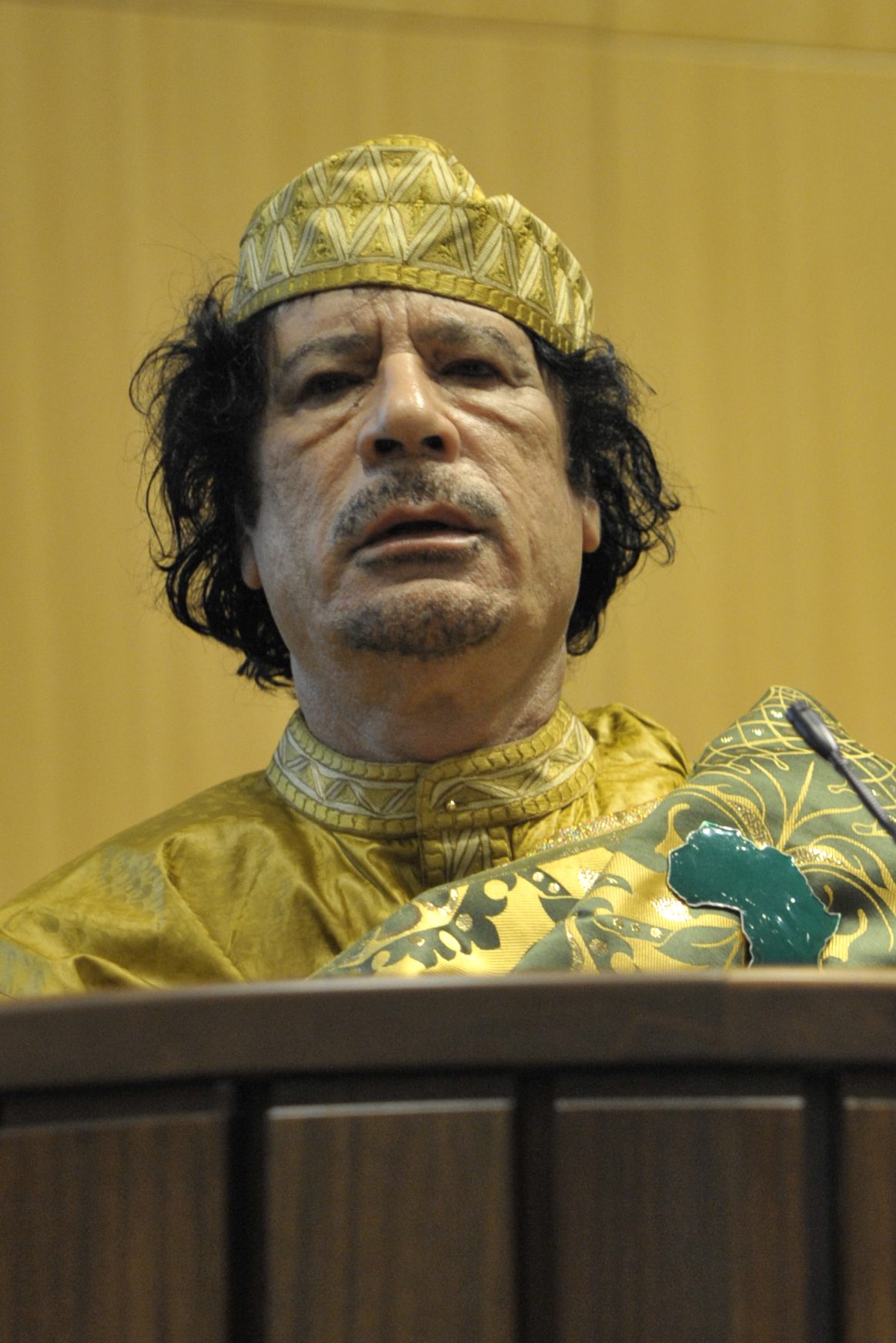
For 42 years, Muammar Gaddafi turned his private eccentricities into instruments of state. He received presidents and prime ministers not in a palace but in a Bedouin tent flown in by cargo plane. He was guarded by a unit of women in camouflage, nail polish and submachine guns. And when rebels overran his Tripoli compound in August 2011, among his possessions they found a photo album devoted to a single subject: former US Secretary of State Condoleezza Rice. Much of the theatre was performed in public and is documented by the diplomats and journalists who witnessed it. Some of what emerged after his death - testimony about abuse, and the hunt for Libya's billions - rests on investigations that remain incomplete, and should be read that way.
Diplomacy under canvas
The tent proclaimed his Bedouin roots and forced every visitor to meet him on his own terms. It was so large it travelled on a separate aircraft, and camels were sometimes tethered outside. In 2004 it stood on the lawn of a government guesthouse in Brussels. In Paris, in December 2007, it was pitched in the garden of the Hotel Marigny, across from the Elysee Palace, during a five-day visit that drew street protests over his human rights record. It went up inside the Kremlin walls in Moscow in 2008 and in a Roman park in 2009. New York defeated it. Visiting the United Nations in September 2009, Gaddafi was refused permission to camp in Central Park; plans to use a Libyan-owned estate in Englewood, New Jersey, collapsed amid local opposition; and when intermediaries quietly rented land in Bedford, New York, belonging to Donald Trump, the town ordered the half-built tent taken down for want of a permit. The colonel slept at Libya's mission to the UN instead. His wardrobe - flowing robes, medal-heavy uniforms, dark glasses - completed the performance; in 2011 he even invited a New York Times reporter to inspect his clothing collection. His Green Book of 1975, setting out a "Third International Theory" and a Jamahiriya, or state of the masses, nominally governed Libya. In practice, every decision that mattered was his.
The Amazonian Guard
From the early 1980s, Gaddafi was shadowed by an all-female protection unit that foreign media dubbed the Amazonian Guard: some 30 to 40 women at his side, trained at a women's military academy in Tripoli and reported, in account after account, to have sworn vows of celibacy and to be ready to die for him. In 1998, one of them was killed shielding him when his motorcade was ambushed. After the regime fell, the unit's glamorous image darkened. In August 2011, five former guards told Seham Sergewa, a Libyan psychologist gathering evidence for the International Criminal Court, that they had been raped by Gaddafi and senior officials and then discarded. French journalist Annick Cojean's 2012 investigation recorded similar testimony from other women, including accounts of teenagers selected at schools and public ceremonies. These are allegations, collected after the fall by advocates and journalists; they were never tested in court, because Gaddafi was captured and killed in Sirte on 20 October 2011. But they recast the guard, for at least some of its members, from a symbol of emancipation into a machinery of coercion.
'Leezza' and the frozen billions
The Rice album, by contrast, was photographed and published for all to see. Gaddafi had made his admiration public years earlier, calling her in a 2007 television interview his "darling black African woman". When Rice visited Tripoli in September 2008 - the first US secretary of state to do so since 1953 - he gave her gifts including a diamond ring and a lute, together valued at more than $200,000 and duly surrendered to the US government, and showed her a video set to a song composed in her honour, "Black Flower in the White House". Rebels who seized the Bab al-Aziziya compound in August 2011 found the album among his effects; Rice later described his fascination with her as slightly eerie. The money trail is larger and murkier. Libya's oil wealth sat in the Libyan Investment Authority, estimated to hold about $65 billion by 2011; the United States alone froze roughly $37 billion of Libyan assets that year. Since then, United Nations panels, courts and journalists have traced Libyan holdings through banks, property and investment funds in Europe and Africa, while rival Libyan authorities have fought over control of the frozen billions and investigators in Belgium have questioned where interest payments on frozen funds went. The documented record amounts to tens of billions frozen, spent or contested - a sum quite separate from the treasure-hunt legends of hidden personal gold, for which investigators have produced no comparable evidence.