The Secrets the Kremlin Never Confirms: Inside Putin's Hidden World
Vladimir Putin has ruled Russia for a quarter of a century, yet his family, fortune and health remain state secrets. Some of the story is documented; much is allegation. Here is what is actually known — and what is not.
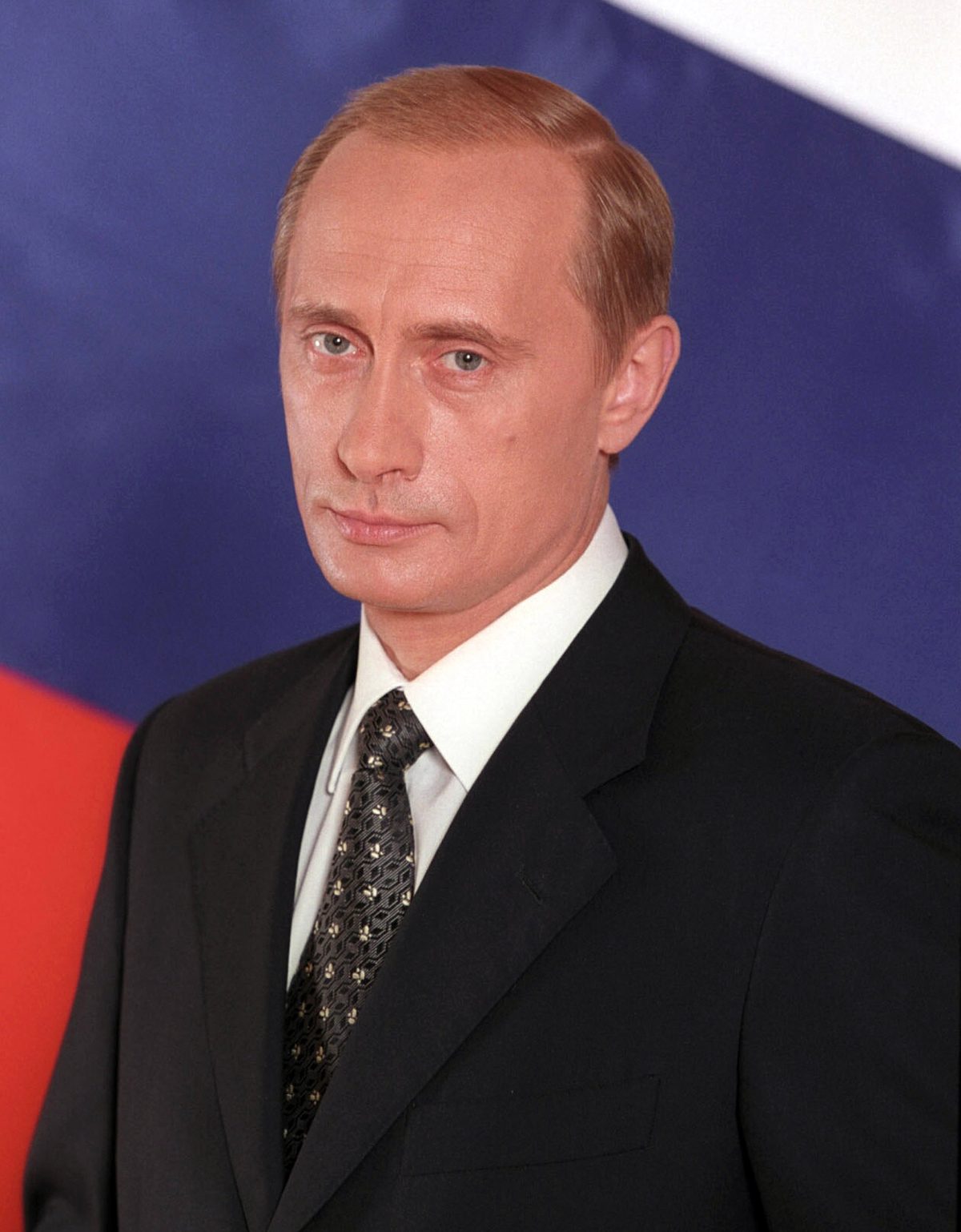
Vladimir Putin has led Russia for more than two decades, yet the most basic facts of his private life — the names of his children, the size of his fortune, even the state of his health — remain among the most closely guarded secrets in world politics. Some of the story is documented by investigators, sanctions notices and leaked financial records. Much more is allegation and rumour, and the Kremlin's answer to almost all of it is denial or silence. This is what the record actually shows, and where it runs out.
The daughters Moscow barely names
Putin married Lyudmila, a former Aeroflot flight attendant, in 1983, and the couple announced their divorce in 2013. They have two daughters, but Putin has refused to publicly acknowledge their names, telling a news conference in 2015 that they lived in Russia and that he never discussed his family with anyone.
Western governments have named them for him. When the United States sanctioned both women in April 2022, the Treasury Department identified the elder daughter, Maria Vladimirovna Vorontsova, born in 1985, as a paediatric endocrinologist and genetics researcher who leads state-funded genetics programmes. Her sister, Katerina Vladimirovna Tikhonova, born in Dresden in 1986 while Putin was a KGB officer in East Germany, was described as a tech executive whose work supports the Russian government and defence industry. Tikhonova, a former acrobatic dancer, runs an artificial intelligence institute at Moscow State University. A 2015 Reuters investigation put the corporate holdings of Tikhonova and her then husband Kirill Shamalov, a petrochemicals shareholder and the son of a longtime Putin acquaintance, at about $2 billion, mostly from his stake.
Explaining the sanctions, a senior U.S. official said Washington believed many of Putin's assets were hidden with family members. The Kremlin called the measures part of a Western sanctions frenzy. Media reports have also linked Putin for years to Alina Kabaeva, a former Olympic rhythmic gymnast. He has refused to confirm any relationship, and claims that they have children together have never been verified.
A palace, a fortune and a paper trail that stops short
Putin's official asset declarations describe a modest life: a salary, a small apartment, a garage and Russian-made cars. His critics allege a reality at the opposite extreme, built on property held by others.
In January 2021, the Anti-Corruption Foundation of opposition leader Alexei Navalny published an investigation into a vast palace complex on the Black Sea coast near Gelendzhik. The foundation alleged the estate was built for Putin's personal use and estimated its cost at more than 100 billion roubles. Putin denied that the palace belonged to him or his family, and the Kremlin described it as a private business project. Days later, Arkady Rotenberg, a billionaire construction magnate and a friend of Putin since childhood, said the property was his and that he planned to turn it into an apartment hotel. The BBC's Russian service later spoke to construction workers who confirmed several of the investigation's details — but the ownership claim remains contested.
Other investigations have traced money around Putin rather than to him. The Panama Papers reporting of 2016 identified about $2 billion moving through offshore companies linked to his inner circle, including his friend Sergei Roldugin, a concert cellist. None of it was held in Putin's own name. The financier Bill Browder, once a major investor in Russia and now one of Putin's fiercest critics, told a U.S. Senate committee in 2017 that he believed Putin had amassed a fortune of $200 billion. That figure is an estimate by an avowed opponent: it has never been documented, and the Kremlin dismisses such claims as fiction. Putin's true personal wealth, if it extends beyond his declarations, remains unproven.
The health rumours with no evidence behind them
Since Russia's full-scale invasion of Ukraine in 2022, claims that Putin is gravely ill — with cancer, Parkinson's disease or other conditions — have circulated relentlessly, sourced to anonymous social-media channels, unnamed officials and frame-by-frame analysis of his public appearances.
There is no verified evidence for any of them. In July 2022, CIA Director William Burns said publicly that U.S. intelligence had no indication Putin was in poor health, remarking that, as far as Washington could tell, he appeared entirely too healthy. The Kremlin has repeatedly denied the rumours and presents Putin as fit and fully in command, while releasing no medical records that might settle the question either way.
That information vacuum is the real story. A leader who conceals his family, whose finances cannot be audited and whose health is a state secret leaves the outside world reading shadows — and in that darkness, documented fact and invention grow side by side.