The Schoolboy Called Pak Un: What Is Really Known About Kim Jong Un's Secret Life
North Korea's leader spent his teens at a Swiss school under a false name, vanished for 20 days in 2020 and rules a state that hides almost everything about him. The documented facts — and the claims that cannot be verified.
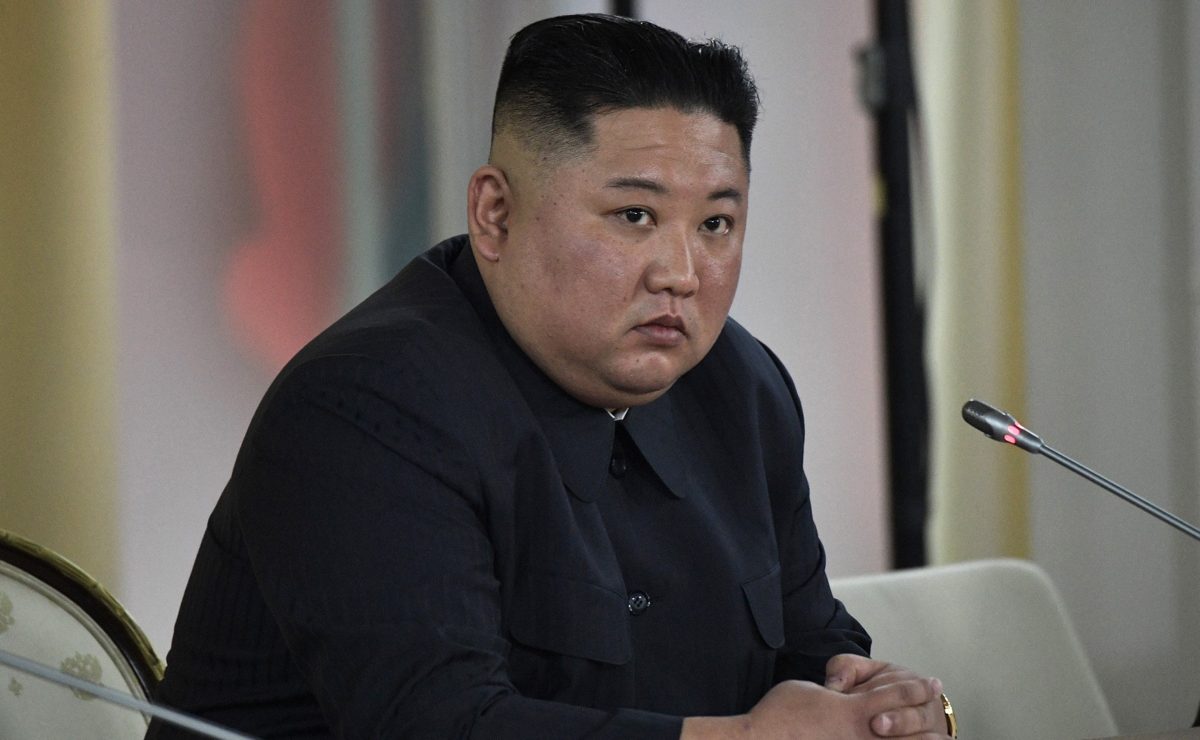
Of all the world's leaders, none is wrapped in more secrecy than Kim Jong Un. North Korea publishes no reliable account of his birth, his education, his family or his health, and independent reporting inside the country is impossible. Yet the outline of a hidden life has emerged — from Swiss school records and former classmates, from United Nations sanctions investigations, and from one extraordinary disappearance in 2020. Some of it is firmly documented. Some rests on defectors' testimony that cannot be checked. The two should never be confused.
A childhood hidden in Switzerland
Kim is widely reported to have spent part of his childhood in Switzerland, where the children of his father, Kim Jong Il, were educated under false names. Swiss and international media have reported that from 1998 to 2000 a boy registered as "Pak Un" attended the Liebefeld-Steinhölzli public school in Köniz, near Bern, presented as the son of a North Korean embassy employee. Former classmates and teachers identified the boy as the future North Korean leader.
Those who remembered him described a quiet, unremarkable pupil who struggled at first with German and was far more interested in basketball — above all in Michael Jordan and the Chicago Bulls — than in schoolwork. He is also reported to have spent time at the private International School of Berne. In late 2000 he left Switzerland abruptly, without farewells, and resurfaced a decade later as his father's designated successor. Even the year of his birth remains disputed: North Korean, South Korean and Swiss-era records have pointed to 1982, 1983 and 1984 respectively.
Luxury imports in a sanctioned state
The United Nations has banned the sale of luxury goods to North Korea since 2006, tightening the prohibition as Pyongyang's nuclear and missile programmes advanced. UN sanctions monitors have repeatedly documented the ban being broken.
A Panel of Experts report in 2019 examined the luxury vehicles appearing around Kim, including a Rolls-Royce Phantom limousine in which he arrived at a meeting with U.S. Secretary of State Mike Pompeo in Pyongyang in October 2018. Rolls-Royce told the panel the car appeared to have been built at its Goodwood plant in England between 2012 and 2017; how it reached North Korea was still being traced. The panel also followed shipments of Mercedes-Benz limousines and Lexus sport-utility vehicles routed through foreign ports and intermediaries; Toyota told investigators it had not exported the Lexus vehicles to North Korea. An earlier panel report traced a yacht photographed alongside Kim in 2013 to the British builder Princess Yachts. North Korea does not acknowledge violating sanctions, and the monitors describe evasion networks designed to make the trade hard to follow — a flow of luxuries into one of the world's poorest and most isolated states.
The 20 days that shook the world, and the claims beyond proof
In April 2020, Kim vanished. He was last seen on April 11, chairing a ruling party meeting, and then missed the April 15 birthday commemorations for his grandfather Kim Il Sung, the state's most important holiday, for the first time since taking power. In the silence, reports multiplied: that he was gravely ill after heart surgery, in a vegetative state, or dead. South Korea's government insisted it had detected no unusual signs and believed Kim was still running state affairs.
After 20 days, state media showed him cutting the ribbon at a fertiliser factory in Sunchon on May 1, smiling and walking among officials. No explanation for the absence was ever given. Standing near him in the photographs was his sister, Kim Yo Jong, whose documented rise is the other great fact of the Kim court. A senior official in the party's propaganda apparatus since 2014, she became in February 2018 the first member of the ruling family to visit South Korea since the Korean War, carrying her brother's invitation to the Winter Olympics. She was restored as an alternate member of the Politburo on April 11, 2020, and has since issued statements in her own name on relations with Seoul and Washington — a public role no North Korean woman had previously held.
Beyond the documented record sits a darker set of claims. Defectors have described a "pleasure squad" — groups of young women allegedly recruited to sing, dance and provide entertainment, and in some accounts sexual services, for the leadership, a practice they say began under Kim Jong Il and, some claim, continued under his son. These accounts cannot be independently verified, details vary between tellers, and Pyongyang does not acknowledge any such institution. They belong in a different category from the school records, the sanctions files and the photographs of May 2020: the category of things the world's most secretive state makes impossible to prove.