Edgar Cayce: The Sleeping Prophet Whose Biggest 'Hit' Was a Rock Formation
Edgar Cayce left behind the one thing most prophets avoid: a complete, dated archive of some 14,000 predictions and diagnoses. Believers find miracles in it, from the 1929 crash to Atlantis off Bimini. Skeptics who read the whole file reach a different verdict.
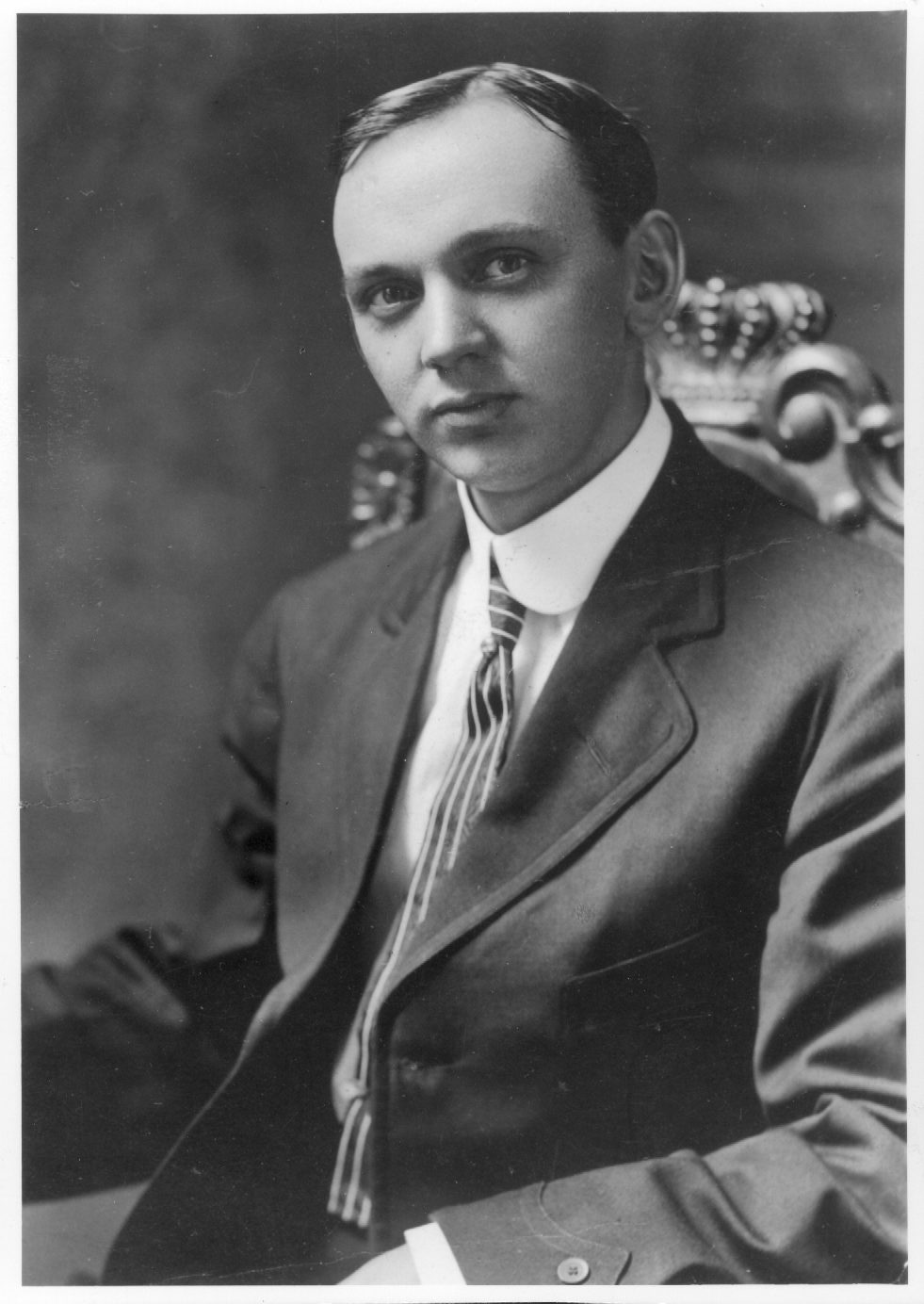
He may be the best-documented psychic who ever lived. Over 43 years, Edgar Cayce lay down, closed his eyes and answered questions in a trance — some 14,000 times — while a stenographer wrote down every word. The transcripts still sit in an archive in Virginia Beach, which means Cayce, almost alone among famous prophets, left a record complete enough to check. Believers call what it shows miraculous. Skeptics who have read the same files call it something else.
The farmer's son who answered questions in his sleep
Edgar Cayce was born in 1877 on a farm near Hopkinsville, Kentucky, the son of a farmer, and grew up devout: he taught Sunday school and, by his own account, read the Bible once for every year of his life. He trained as a photographer — a useful trade for a young man who, around the age of 21, developed a mysterious affliction that left him able to speak only in a whisper. According to the story Cayce and his biographers told, a hypnotist put him into a trance, in which he calmly described his own condition and its treatment. His voice returned, and the 'sleeping' diagnoses began.
For the rest of his life, Cayce gave 'readings': he would lie down, loosen his collar, enter a self-induced, sleep-like state and answer whatever was asked, insisting afterwards that he remembered nothing of what he had said. Most requests concerned health — diagnoses and remedies for people he had never met, often hundreds of miles away. Others ranged over reincarnation, dreams, the lost continent of Atlantis and the future. From the 1920s a stenographer, Gladys Davis, recorded the sessions word for word. In 1931 Cayce founded the Association for Research and Enlightenment (A.R.E.) in Virginia Beach to preserve them, and it still catalogues the files today.
The predictions his followers still cite
Cayce's reputation rests on a handful of apparent hits, endlessly reprinted by the A.R.E. and his biographers. Followers credit him with warning of the 1929 Wall Street crash and with foreseeing the broad shape of the Second World War. The most specific concerned Atlantis, which Cayce described hundreds of times: in a 1940 reading he said that a fragment of the lost continent — 'Poseidia' — would rise again near the Bahamas in 1968 or 1969. In 1968 divers publicised a remarkable underwater formation off the island of Bimini: long, straight rows of large flat stones that looked like a paved road or a harbour wall. For believers, the timing was beyond coincidence, and the 'Bimini Road' became the most famous claimed fulfilment in modern prophecy.
Geologists who examined the formation reached a duller conclusion. Core samples showed the stones were beachrock — a natural shoreline limestone that forms quickly and fractures into regular, pavement-like blocks. Nothing at Bimini required a lost civilisation to explain it.
What the full archive actually shows
The archive cuts both ways, because it also preserves the failures in Cayce's own words. His readings described sweeping 'earth changes' — parts of California sliding into the sea, Los Angeles and San Francisco destroyed, a shift of the Earth's poles — scheduled for the closing decades of the twentieth century. They did not happen. He said an Atlantean 'Hall of Records' buried beneath Egypt's Sphinx would be opened between 1996 and 1998; it was not. Skeptical researchers such as Dale Beyerstein, writing in Skeptical Inquirer, and the magician James Randi noted a pattern in the health readings too: vague, hedged phrasing ('I feel that', 'perhaps'), diagnoses that echoed the osteopathic manuals and home-remedy books Cayce read avidly, and embarrassing cases in which readings were given for people who, unknown to Cayce, had already died. Some remedies were harmless folk fare. Others — laetrile recommended for cancer, a freshly skinned rabbit laid warm on a tumour — were dangerous nonsense.
Cayce died in Virginia Beach on 3 January 1945, worn out, associates said, by giving as many as eight readings a day against medical advice. He had always insisted he was a healer, not a prophet, and seemed uneasy with the fame a 1943 magazine profile and a bestselling biography brought him. His followers kept the faith anyway: Jess Stearn's 1967 book The Sleeping Prophet fixed the nickname in place, and the A.R.E. remains a place of pilgrimage for the New Age movement Cayce is often credited with founding. The fairest verdict may be the one the archive itself delivers. Cayce left behind the one thing most prophets avoid — a complete, dated, checkable record — and checked in full, it shows an ordinary scatter of lucky guesses, vagueness and plain misses, preserved forever alongside the hits.