The Squirrels Won: How Mark Rober's Backyard Maze Became a 148-Million-View Science Lesson
Former NASA engineer Mark Rober built a Ninja Warrior course for the squirrels raiding his bird feeder in 2020. The video has about 148 million views — and inspired a scientific paper.
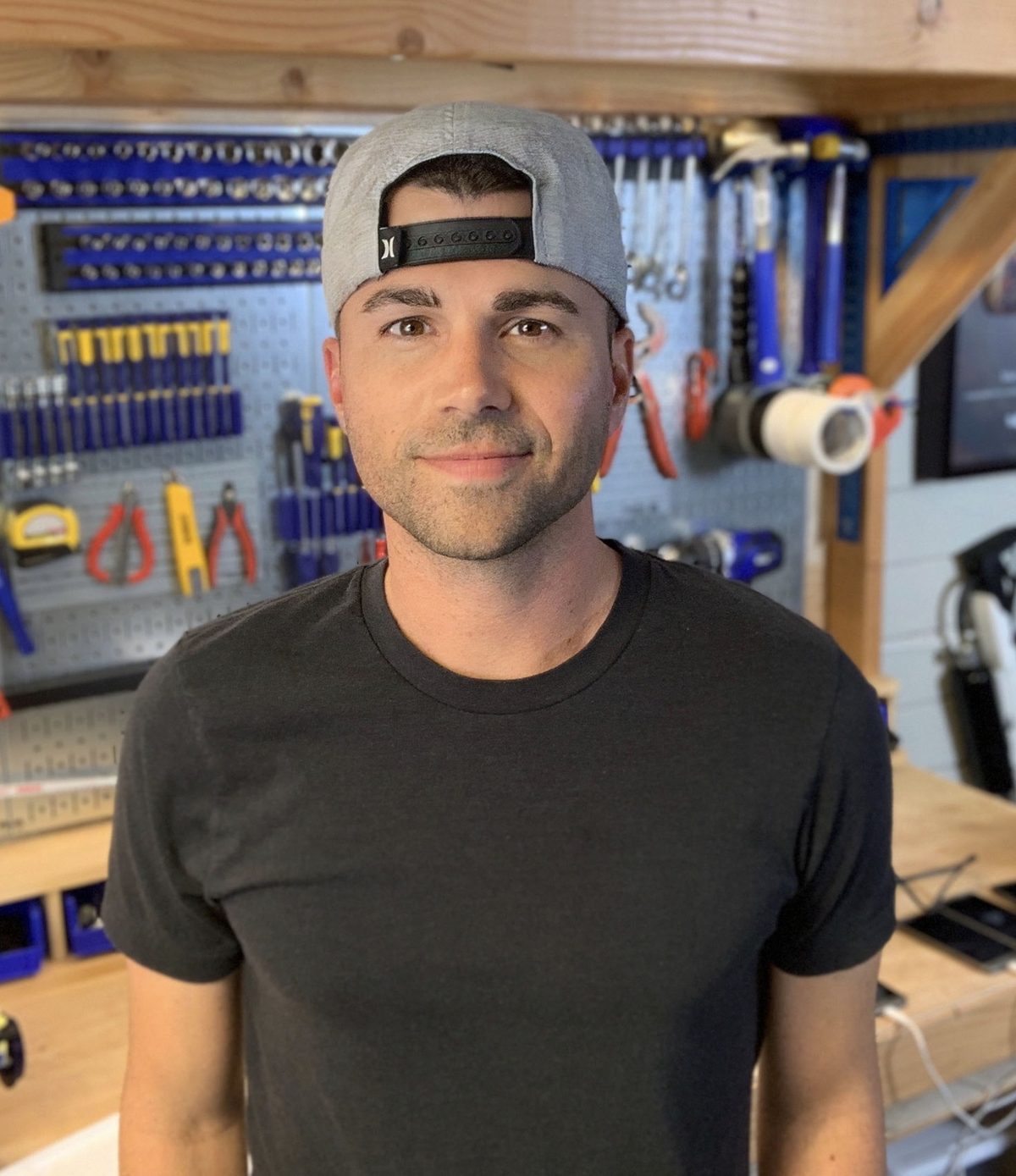
It began, as many great engineering projects do, with a grudge. During lockdown in 2020, former NASA engineer Mark Rober set up a bird feeder in his backyard, watched squirrels defeat every "squirrel-proof" design he bought, and decided to make them work for their lunch. The result, "Backyard Squirrel Maze 1.0 - Ninja Warrior Course", uploaded on May 24, 2020, has been watched about 148 million times at the time of writing — and the squirrels, it should be said, won.
An obstacle course built out of spite
Rober, who spent nine years at NASA's Jet Propulsion Laboratory working on the Curiosity Mars rover, applied space-programme rigour to a suburban nuisance. Rather than repel the squirrels, he built them an eight-stage obstacle course modelled on the television show *American Ninja Warrior*, stretched across his backyard. To reach a platform of walnuts, a squirrel had to cross unstable bridges, navigate a maze, survive a mechanical catapult that flung it — safely, and with a grace that surprised even Rober — through the air, and beat a final gauntlet designed to be unbeatable.
The video's masterstroke is that Rober treats his opponents as athletes. He gives the regular visitors names, studies their techniques in slow motion, keeps a leaderboard and commentates their runs like a sports broadcaster who has begun, despite himself, to root for the other team. One squirrel, Marty, undermines weeks of engineering by spotting a shortcut past the final obstacle. Others simply refuse to be deterred: whatever Rober built, the squirrels solved, usually within hours. The course that was meant to defend a bird feeder became a demonstration of animal problem-solving that no fence could have provided.
It was, by the standards of his later productions, a homemade film: one engineer, one garden, weeks of lockdown tinkering and a camera pointed at his own fence. Rober has described the project as a way to stay sane while confined at home, and the constraint shows in the best possible way — every obstacle had to be built by hand, tested against live opponents and rebuilt when those opponents embarrassed it, which they did daily. The contest between builder and squirrels is perfectly balanced because it was real.
The 20-minute video is also a quiet lesson in how Rober works. Every obstacle arrives with its engineering explained — the physics of the catapult, the trial-and-error of the bridge — but the explanation never stops the story, because the viewer is always waiting to see whether the next squirrel will make it.
Sequels, and an unexpected scientific paper
Most viral videos fade. The squirrel maze compounded. By September 2023 the original had reached 114 million views, and it has since climbed to roughly 148 million. Rober built two sequels: "Backyard Squirrel Maze 2.0 - The Walnut Heist", in which the squirrels rob a miniature bank, has about 130 million views, and "Backyard Squirrelympics 3.0", an Olympic-themed edition, about 48 million — more than 300 million views across the trilogy.
Then came the strangest honour of all. In 2021, researchers publishing in the journal *Integrative and Comparative Biology* used footage from the video — specifically the moments when squirrels are launched from Rober's catapult — to study the animals' mid-air righting reflex, modelling how the tail corrects the body's rotation during a fall. A backyard prank had become source material for a peer-reviewed paper, with the scientists thanking Rober for the inspiration. It is difficult to think of another YouTube video that is simultaneously children's entertainment, sports parody and zoological data.
YouTube's favourite teacher
The maze arrived at a moment when Rober was already one of the platform's most trusted science communicators — his glitter-bomb traps for parcel thieves had made him famous in 2018 — but it crystallised his formula: take a genuine engineering problem, give it a story with heroes, and let the audience learn the science while waiting for the punchline. His channel now has more than 86 million subscribers, and in 2022 he founded CrunchLabs, which sells build-it-yourself engineering kits to children, turning the video's philosophy into a business.
The platform beyond YouTube took notice as well: Rober has guest-hosted *Jimmy Kimmel Live!*, delivered the 2023 commencement address at MIT, and been named an honorary fellow of the Institution of Engineering and Technology. Rober has said he makes roughly one video a month because each build takes that long to engineer properly — a pace that looks leisurely beside the upload schedules of his peers, and that the squirrel maze justified completely. Six years after a group of suburban squirrels humiliated a NASA engineer in his own garden, people are still arriving to watch it happen. The feeder, presumably, is still not safe.