UN watchdog 'increasingly concerned' over Iran enrichment plant it has never inspected
The IAEA says it is 'increasingly concerned' about Iran's Isfahan enrichment plant, which inspectors have never visited, and cannot say where more than 400kg of highly enriched uranium has gone.
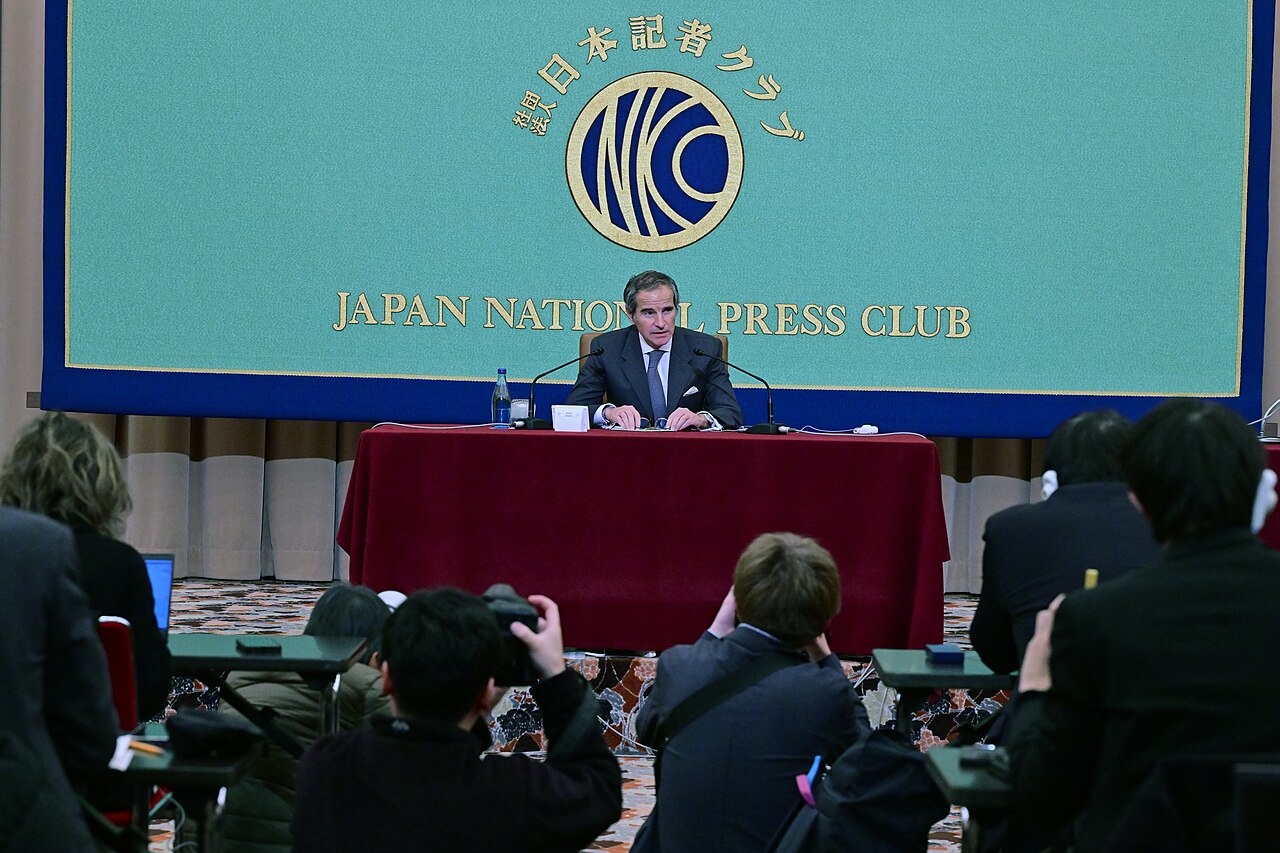
The United Nations' nuclear watchdog has said it is "increasingly concerned" about an Iranian uranium enrichment plant that its inspectors have never been allowed to visit, in a confidential report that shows how much of Tehran's nuclear programme has slipped beyond international view since the bombing campaign carried out by Israel and the United States.
In its quarterly report to member states on Friday, the International Atomic Energy Agency (IAEA) said it does not know the exact location of the Isfahan Fuel Enrichment Plant, what its status is for safeguards purposes, or whether it contains nuclear material. The agency was careful to say that the report did not establish that enrichment is taking place at the plant. But it also said it could not conclude that no declared nuclear material had been diverted from peaceful activities — the basic assurance its inspection system exists to provide.
Director General Rafael Grossi wrote that it is more than a year since the agency lost continuity of knowledge over Iran's inventories of highly enriched uranium, and he urged Tehran to let verification resume "without further delay", describing the lack of access as a serious proliferation concern that needs rectification "with the utmost urgency".
A plant the inspectors have never seen
Iran declared the Isfahan Fuel Enrichment Plant, known as the IFEP, to the agency on June 12, 2025. The city of Isfahan, in central Iran, has long been associated with the country's nuclear programme, and a new enrichment facility there would be a significant addition to it. Under the safeguards system, countries that have signed up to nuclear non-proliferation commitments declare their nuclear material and facilities, and IAEA inspectors verify that the declarations are complete and that material is not being diverted to weapons work.
In this case, however, verification never began. An inspection of the new plant was planned for June 13, 2025 — the day after Iran declared it. That same day, Israel and the United States began a 12-day bombing campaign that destroyed or badly damaged Iran's other uranium enrichment plants, making the planned visit impossible.
Iran has not allowed IAEA inspectors to return to any of the bombed facilities since the strikes. Tehran says resuming inspections is not possible in the current security situation, and it has passed a law suspending cooperation with the agency. Inspectors were able to visit the Bushehr plant in September, but they have had no access to other key sites — and none at all to the Isfahan plant, whose precise location remains unknown to them.
What was lost when the bombs fell
The deeper problem described in the report is not only the unvisited plant. It is the broken chain of knowledge about material Iran produced before the war. "Continuity of knowledge" is the inspectors' term for an unbroken record — built from visits, seals, cameras and measurements — that allows them to say with confidence where nuclear material is and how much of it exists. Once that chain is broken, rebuilding it is painstaking work.
Grossi wrote that more than a year has now passed since the agency lost that continuity over Iran's inventories of highly enriched uranium. In particular, the whereabouts of more than 400kg of near-weapons-grade enriched uranium, produced before the strikes, remains unknown. Highly enriched uranium is the material of greatest concern to inspectors because the same enrichment technology that produces fuel for power reactors can, taken further, produce material usable in a nuclear weapon.
That uncertainty is why the agency says it cannot give its usual assurance that no declared material has been diverted. It is not an accusation that diversion has happened; it is a statement that, without access, the agency can no longer rule it out — a significant change for a system built on verified declarations rather than trust.
What happens next
The dispute has already moved beyond the agency's Vienna headquarters. In September, the IAEA's board referred Iran to the UN Security Council — the first such referral in 20 years. A referral puts the file in the hands of the Security Council, the UN's most powerful body, and raises the stakes for Tehran considerably, even if it does not by itself determine what action, if any, follows.
Grossi has urged Tehran to consider gradual technical measures that would allow inspectors to return step by step, rather than demanding an immediate return to the full arrangements that existed before the bombing. His message, as set out in the report, is that verification "without further delay" is critical.
For now, the two sides remain far apart. Iran points to the security situation and to its new law suspending cooperation; the agency points to questions that only inspections can answer — where the Isfahan plant is, what it contains, and where more than 400kg of highly enriched uranium has gone. Until inspectors are back on the ground, those questions will hang over every diplomatic argument about Iran's programme, because nobody outside Iran can currently verify the answers.