Putin open to Europeans joining Ukraine talks, envoy says, as strikes continue
A U.S. envoy said President Vladimir Putin agreed to let European representatives join the next round of Ukraine peace talks, even as Russia reported a massive overnight strike.
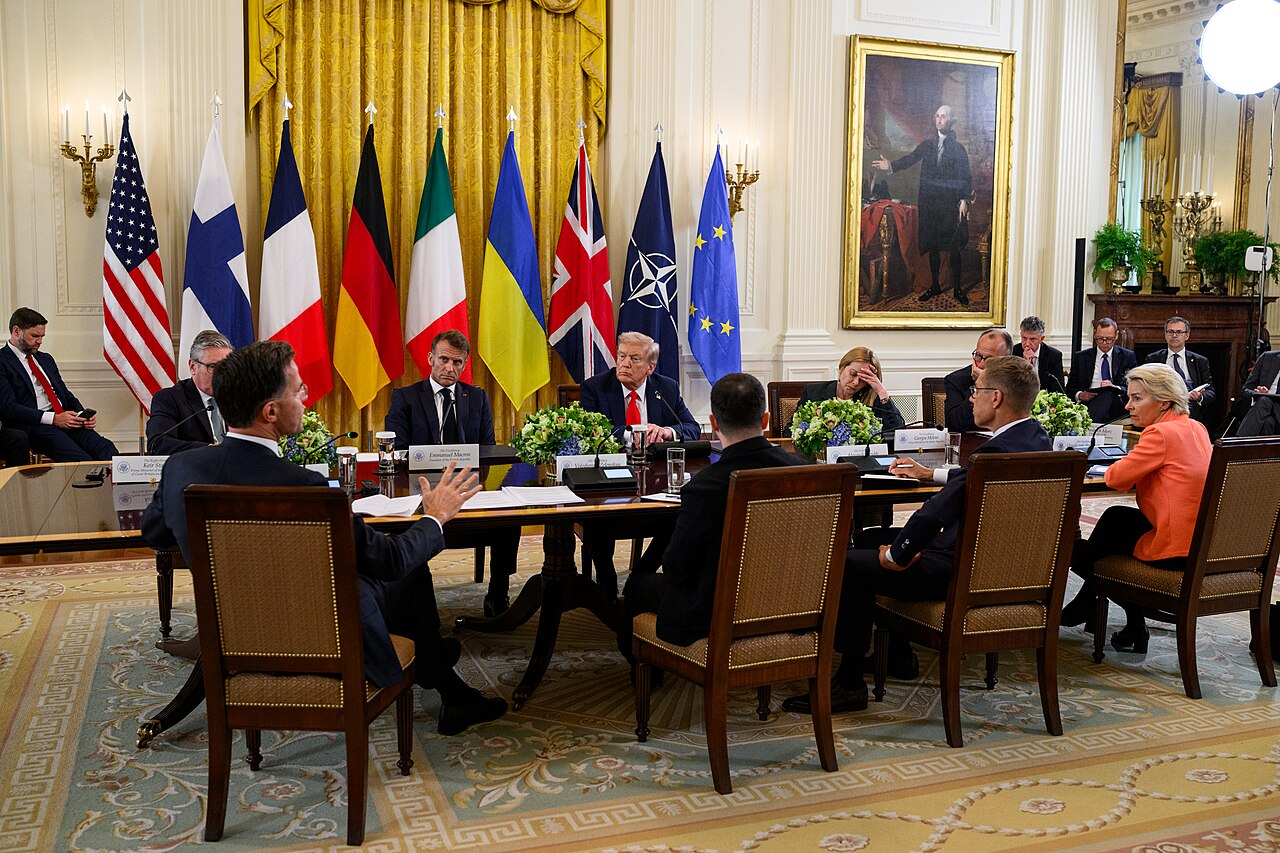
President Vladimir Putin agreed on Thursday to let European representatives join the next round of Ukraine peace talks, a U.S. envoy said, in what would be a notable widening of a negotiation that European capitals have long demanded a seat at.
The announcement, as described by the envoy, does not by itself signal a breakthrough, nor does it set out the format, timing or agenda for the next round. But the question of who sits at the table has been central to the diplomacy around the war from the beginning. European governments have argued that any settlement affecting the security of the continent cannot be durable if it is negotiated without them, while Kyiv has insisted that its own voice must be at the centre of any discussion about its future.
Ukrainian President Volodymyr Zelenskyy has also held talks with U.S. envoys and called for a European role in any peace process, arguing that a settlement imposed without Europe would not hold. That position reflects a broader concern shared in many European capitals: that an agreement reached over the heads of those most directly affected could prove fragile, difficult to implement and hard to sustain once the immediate pressure to end the fighting eases.
What happened
According to the U.S. envoy, Putin's agreement would allow European representatives to join the next round of talks. The original reporting did not spell out which countries or institutions would be represented, what status those representatives would have, or whether they would participate in all sessions or only in parts of the discussion. Those details matter in diplomacy, where questions of representation often determine what can actually be decided.
Why it matters
The war in Ukraine has reshaped European security, energy policy and defence planning on a scale not seen in decades. It has displaced millions of people, devastated cities and infrastructure, and drawn in countries far beyond the battlefield through sanctions, military support, humanitarian aid and the economic consequences of disrupted trade. Any negotiation that seeks to end the fighting therefore carries implications that extend well beyond a ceasefire line.
That is why the composition of the talks matters so much. European states border Ukraine, host large numbers of displaced Ukrainians, and would be expected to play a major role in any post-war reconstruction and in any security arrangements that follow. If representatives from Europe are present when terms are discussed, they can speak directly to what they are prepared to support, fund and guarantee over the long term. If they are absent, any agreement may face difficult questions later about legitimacy and implementation.
There is also the question of trust. European governments remain sceptical until a ceasefire is actually in place, as the original reporting noted. That scepticism is rooted in experience: announcements about diplomacy have repeatedly coincided with continued fighting, making it hard for officials and the public to judge whether a process is genuine until it produces verifiable steps on the ground.
For Kyiv, European participation is also about balance. Zelenskyy has argued that a European role strengthens the process, helping to ensure that Ukraine's interests and Europe's security concerns are considered together rather than traded against each other. For Moscow, widening the table changes the dynamics as well, bringing in parties that have been among Kyiv's strongest supporters.
What happens next
The diplomacy ran in parallel with the war itself. Russia's military said it carried out a massive overnight strike on military factories across Ukraine, and Kyiv's mayor said a Russian drone struck an apartment block in the capital. Those reports, coming alongside talk of broader negotiations, illustrate the stark contrast that has defined this phase of the conflict.
That contrast — talks widening while strikes continue — is the central reality of this phase of the war. It means the next steps will be judged not only by statements from envoys but by events on the ground: whether a ceasefire is discussed in concrete terms, whether it is monitored, and whether it holds for more than a brief pause.
In the coming days, attention will focus on whether a date and venue for the next round are confirmed, who exactly is invited, and what is placed on the agenda. Officials will also be watching for any response from European capitals about the form their participation might take, and from Kyiv about how it sees the expanded format working alongside its own direct channels.
Until those details emerge, the envoy's statement should be read for what it is: a reported opening on the question of participation, not yet a peace agreement, a ceasefire or even a confirmed timetable. BreakingNewsWorld will update this story as the original sources confirm the participants, the schedule and any terms that are formally proposed, and as the situation on the ground becomes clearer.