Why Jensen Huang's affair scandal forced him out of Nvidia
Jensen Huang's fall was not caused by an affair alone. One reported partner is suspected by US intelligence of spying for China, another was his direct subordinate — a combination that turned a private scandal into a national-security and governance crisis.
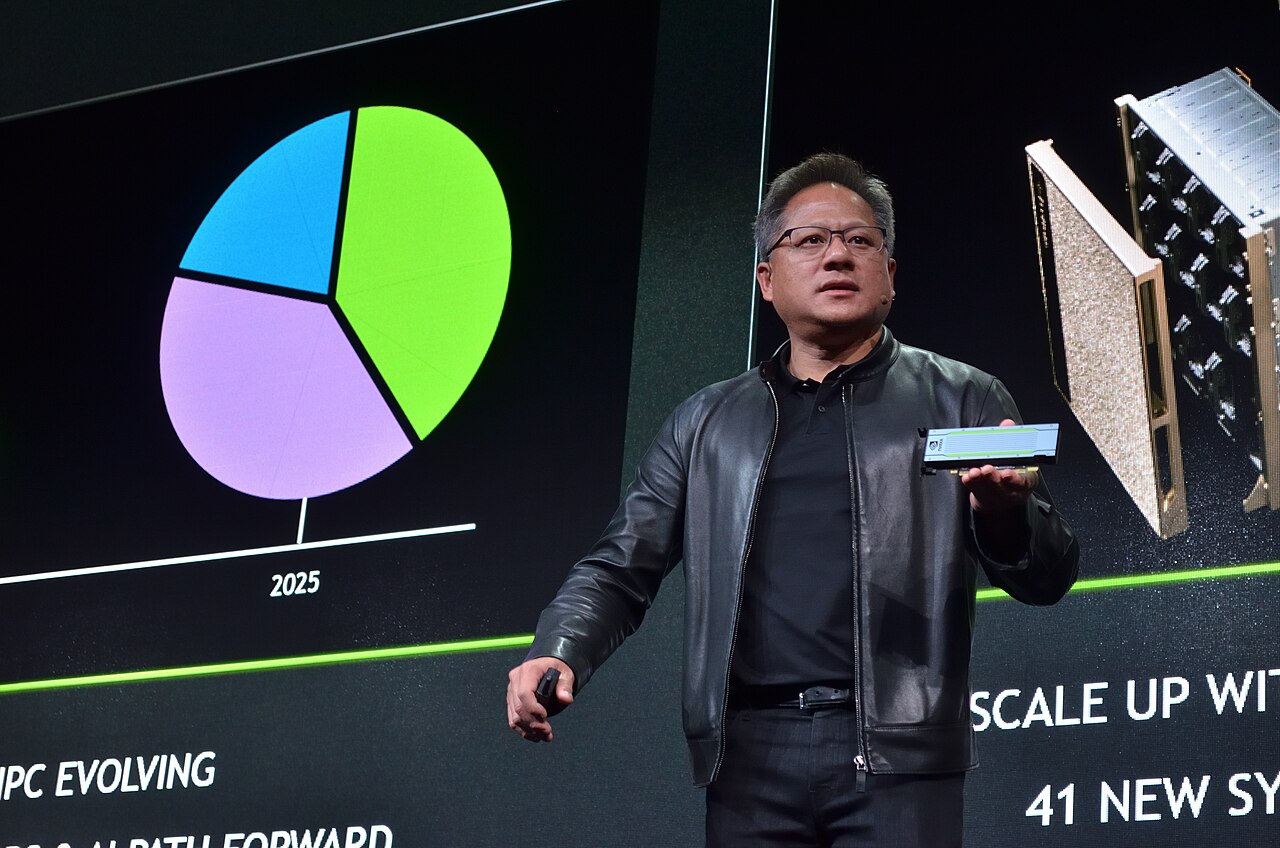
For 33 years, Jensen Huang was Nvidia: the leather-jacketed co-founder who turned a maker of graphics cards for gamers into the engine of the artificial intelligence boom and one of the most valuable companies on Earth. On Thursday he resigned as president, chief executive and board member with immediate effect — undone not by a rival, a failed product or a market crash, but by revelations about his private life that grew into a national-security investigation and a boardroom crisis.
The fall began with Huang's own words. In a memo to employees on Sunday, the 63-year-old acknowledged he had been "unfaithful" to his wife, Lori, his partner of more than four decades, and said he took "full responsibility". "There is no excuse for what I did. I am deeply sorry," he wrote. The memo named no one. Reporting over the following days supplied the names, each new detail making his position less tenable.
Why this was never just an affair
What transformed a personal scandal into an existential crisis for Nvidia was who the affair was with. Huang's relationship, by multiple accounts, was with Alice Huang, a Chinese businesswoman and former senior executive at Megaspeed International, a Singapore-based Nvidia customer. US intelligence officials concluded in a classified memo last year, according to reports, that she had targeted Huang at the direction of Chinese intelligence — an allegation Beijing has dismissed as "groundless smears and slanders".
That allegation landed on Nvidia's most sensitive fault line. The company's advanced AI chips are the central chokepoint of the US-China technology rivalry, and Megaspeed has been investigated over suspected diversion of those chips to China in breach of export controls, which it denies. A short-seller report in May had already flagged Huang's "uncomfortably close relationship" with Alice Huang, and only two weeks ago Huang described Nvidia's dealings with Megaspeed as "normal and not unusual". The board's investigation, launched the day of his admission, was framed accordingly: not whether the CEO had strayed, but whether he had been a foreign intelligence target. Bloomberg has reported that Huang is not a target of federal probes, and no public finding says he shared Nvidia secrets.
The women at the centre of the scandal
Alice Huang, 49, also known as Huang Le, built her career at Megaspeed, which calls itself a core partner for Nvidia's computing-power cloud business in Asia-Pacific. She and Jensen Huang — no relation — were photographed together repeatedly, including at a Taipei dinner he hosted during Computex in May 2025, where video showed them arm in arm; his daughter Madison took some of the pictures. Singapore police, who investigated her over Megaspeed's dealings, found insufficient evidence to prosecute, but gave her a stern warning for lying to officers, returned her passport in February and barred her from re-entering the country; Taiwan has also banned her. She is reported to be living in Beijing and has not commented.
The second relationship reported was closer to home. The New York Times reported on Wednesday that Huang had also had an affair with Kimberly Powell, 48, Nvidia's vice president of healthcare — an executive who reported directly to him. Powell joined Nvidia in 2008, rose through its medical-imaging business and has run healthcare since 2017 — more than 18 years alongside Huang. The Times, citing five current or former employees, said the pair were seen being affectionate at a San Jose hotel during a company conference in March, and that a bystander who filmed them was sequestered by Huang's security and offered a non-disclosure agreement. Powell and Nvidia did not comment on that report, and Reuters said it could not immediately verify it. Hours after Huang resigned, Reuters reported a third relationship, with another Nvidia employee who has not been named.
Why the board acted — and what is still unknown
Either relationship alone would have been difficult; together, they were fatal. A chief executive's affair with a direct subordinate is a textbook conflict of interest — Nvidia's own code of conduct instructs staff to "avoid situations where our actions create conflict", including personal relationships — and it exposed the company to legal and shareholder action. Investors delivered their own verdict: Nvidia's shares fell 4.3% on Thursday, and roughly $600 billion has been wiped from its market value this week. With dozens of executives reporting directly to Huang and no disclosed succession plan, the board moved to contain the damage, naming finance chief Colette Kress interim chief executive and appointing Harvey Jones as its first-ever chair.
What no reporting has established is Huang's motive — why a man who spent 33 years building Nvidia would risk it all. The documented facts go only as far as proximity and opportunity: years of business travel and deal-making around Megaspeed, and nearly two decades of working closely with Powell. The investigations, meanwhile, continue: US lawmakers have demanded briefings, the FBI and the Justice Department are reported to be examining the Megaspeed affair, and Kress must now steady a company worth some $4 trillion whose founder's exit has become a question of state.