Google's Gemini AI Earns Gold-Medal Standard at the Maths Olympiad
Google DeepMind says an advanced version of its Gemini model solved five of six problems at the International Mathematical Olympiad to reach gold-medal standard, in a result officially graded and certified by the competition's own coordinators.
An advanced version of Google DeepMind's Gemini artificial intelligence model has achieved gold-medal standard at the International Mathematical Olympiad, solving five of the competition's six problems perfectly to score 35 points out of 42 — a result that was officially graded and certified by the Olympiad's own coordinators, using the same criteria applied to the answers written by student contestants.
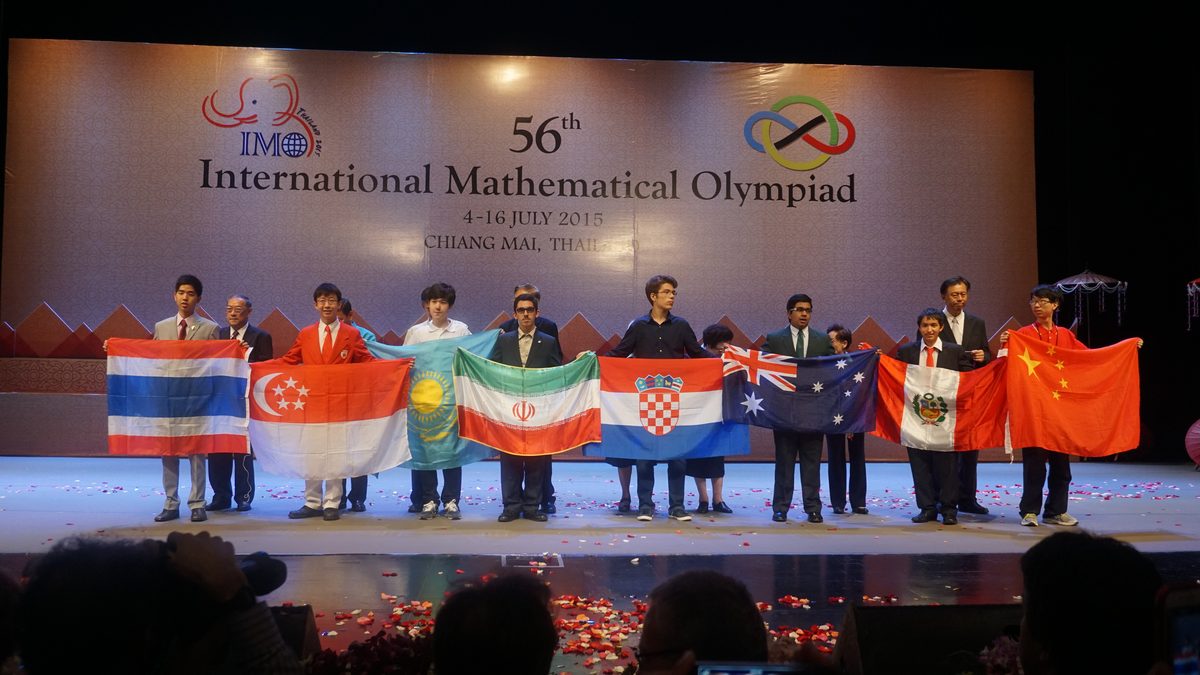
The IMO, held annually since 1959, is the world's most prestigious mathematics competition for pre-university students. Each participating country fields a team of up to six elite school mathematicians, who tackle six exceptionally difficult problems spanning algebra, combinatorics, geometry and number theory. Medals go to roughly the top half of contestants, and only about eight percent of them win gold. The problems are famous for demanding genuine creativity: they cannot be cracked by memorised formulas, and one complete solution can require hours of sustained, multi-step reasoning — qualities that have made the contest a closely watched benchmark for artificial intelligence.
This year's Olympiad was hosted on Australia's Sunshine Coast in July and drew 635 students from 114 countries, the largest field in the competition's history. It was against those students, on the same papers and under the same rules, that the AI system was measured.
From silver standard to gold
The result marks a rapid advance on DeepMind's own performance a year earlier. In 2024, its combined AlphaProof and AlphaGeometry 2 systems reached silver-medal standard at the IMO, scoring 28 points and solving four of the six problems. That effort, however, came with heavy caveats: human experts first had to translate the problems into formal mathematical languages such as Lean, and the systems needed two to three days of computation to produce their solutions. The Gemini system, by contrast, operated entirely end to end in natural language, working directly from the official problem statements, and it delivered its answers within the competition's standard four-and-a-half-hour time limit.
IMO President Gregor Dolinar confirmed the milestone in a statement released by DeepMind. "We can confirm that Google DeepMind has reached the much-desired milestone, earning 35 out of a possible 42 points — a gold medal score," he said. This year, for the first time, the IMO worked with an inaugural cohort of AI developers whose submitted solutions could be formally graded and certified by IMO coordinators, rather than assessed informally by the companies themselves.
How 'parallel thinking' cracks hard problems
DeepMind attributes the jump in performance to a version of Gemini enhanced with a capability it calls Deep Think. The mode builds on what the company describes as "parallel thinking": instead of committing to a single chain of reasoning, the model can explore many possible lines of attack simultaneously and combine the most promising elements before settling on a final answer. The system was trained with novel reinforcement learning techniques designed to make better use of data involving multi-step reasoning, problem-solving and theorem proving. It also had access to a curated collection of high-quality solutions to earlier problems, along with general hints and tips on how to approach the distinctive style of questions the Olympiad sets.
The company said a version of the Deep Think capability would first be made available to a select group of trusted testers, including mathematicians, before being offered more widely to subscribers of its Google AI Ultra plan. It presented the Olympiad result as one step in a longer programme of applying advanced reasoning models to scientific questions that resist straightforward computation.
A benchmark result, with caveats
DeepMind itself was careful to spell out the limits of the certification: the IMO confirmed that the submitted answers are complete and correct solutions, but its review does not extend to validating the system, the processes behind it, or the underlying model. Nor did the machine outscore the finest human competitors. News agency reporting on the same event noted that five young contestants achieved perfect scores of 42, and that OpenAI's experimental reasoning model had also reached a gold-level score of 35 points under a separate evaluation. A gold-medal standard at a school olympiad, in other words, is not by itself a research breakthrough.
Even so, researchers say the trajectory matters. In the space of a single year, AI systems have moved from silver to gold at one of the hardest problem-solving contests open to human students, and have done so under the official clock and in plain language. Whether the same techniques can help mathematicians prove genuinely new results, rather than solve set problems with known answers, remains an open question. But the Olympiad scoreboard suggests that the gap between machine reasoning and elite human problem-solving is narrowing considerably faster than many specialists expected.