China's 'Artificial Sun' Sets World Record With 1,066-Second Fusion Plasma
China's EAST tokamak, known as the 'artificial sun', sustained a high-confinement fusion plasma for 1,066 seconds in January 2025, smashing its own world record and passing a duration milestone seen as vital for future fusion power plants.
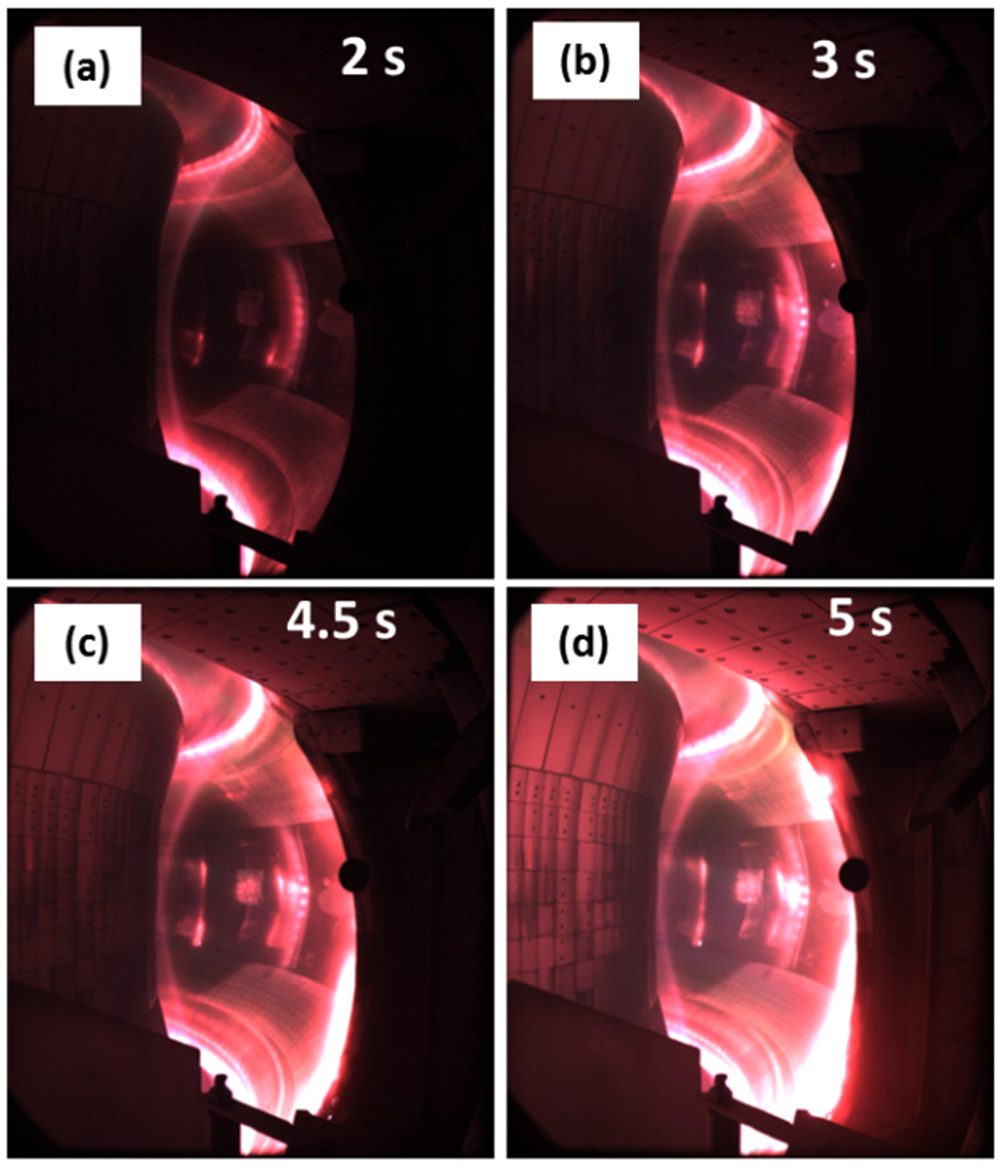
China's Experimental Advanced Superconducting Tokamak, the fusion reactor known as EAST and nicknamed the "artificial sun", has set a new world record by sustaining a steady-state, high-confinement plasma for 1,066 seconds, state media reported — more than two and a half times the previous record and beyond a duration threshold that researchers regard as essential for any future fusion power station.
The record was achieved on Monday 20 January 2025 at the Institute of Plasma Physics of the Chinese Academy of Sciences (ASIPP) in Hefei, Anhui province. It eclipsed the previous world mark of 403 seconds, which EAST itself had set in 2023. The tokamak, which confines superheated plasma inside a doughnut-shaped magnetic chamber, has operated since 2006 as an open test platform for Chinese and international scientists, and crossing the 1,000-second line is considered a key step in fusion research.
Why a thousand seconds matters
"A fusion device must achieve stable operation at high efficiency for thousands of seconds to enable the self-sustaining circulation of plasma, which is critical for the continuous power generation of future fusion plants," said Song Yuntao, director of ASIPP. He described the new record as being of monumental significance and a crucial step towards a working fusion reactor, adding that the team hopes to expand international collaboration through EAST and bring fusion energy into practical use for humanity.
The distinction matters because a laboratory plasma that survives for a few seconds proves a point of physics, while a power plant must run almost continuously. Sustaining the high-confinement mode — the operating regime planned for future reactors — at high efficiency for more than a thousand seconds shows that the plasma can be fed, heated and controlled in a steady state rather than in a brief pulse.
Gong Xianzu, head of the EAST Physics and Experimental Operations division, said several of the machine's systems had been upgraded since the previous round of experiments. The heating system, which previously operated at the equivalent power of nearly 70,000 household microwave ovens, has now doubled its output while maintaining stability and continuity.
The long road to fusion power
The ultimate goal of an artificial sun is to replicate the nuclear fusion that powers the real one: forcing light atomic nuclei together to release energy, providing an effectively endless and clean source of power. Scientists around the world have pursued that goal for more than 70 years. To generate electricity, a fusion device must reach temperatures of more than 100 million degrees Celsius — many times hotter than the core of the sun — sustain stable long-term operation, and keep the whole reaction controllable. EAST is a research experiment, not a power station, and the new record concerns duration and control rather than net energy output. Bridging that remaining gap is the central challenge of the field.
Unlike nuclear fission, the process used in today's power stations, which splits heavy atoms apart, fusion joins light atoms together — typically isotopes of hydrogen that can be extracted from seawater — and produces no carbon emissions. That promise explains why governments have kept funding the research through decades of slow progress. The difficulty is the engineering: no material can physically contain a plasma at 100 million degrees, so tokamaks like EAST suspend it inside powerful magnetic fields generated by superconducting magnets, and the plasma must be held stable while enormous energy is poured in to keep it burning.
A global and collaborative race
China is pursuing that goal both at home and through the world's largest fusion collaboration. It joined the ITER programme in 2006, the year EAST began operating, as the project's seventh member, and it is responsible for about nine percent of the construction and operation of the giant experimental tokamak now being built in southern France, with ASIPP serving as the main unit of the Chinese mission. ITER will be the world's largest magnetic-confinement fusion device, and the high-confinement mode that EAST held for 1,066 seconds is the fundamental operating mode planned for it, as well as for the future China Fusion Engineering Test Reactor.
A new generation of experimental fusion facilities is also under construction in Hefei, EAST's home city. By repeatedly breaking its own endurance records — 403 seconds in 2023, now 1,066 seconds — the artificial sun programme has kept China at the front of long-pulse fusion research, even though economical fusion electricity remains, by common consent, years away.