Delhi overtakes Lahore as world's most polluted city as smog turns 'severe'
Delhi overtook Lahore on Friday as the world's most polluted major city, with official readings classed as 'severe' for the first time this season as thick smog blanketed the Indian capital.
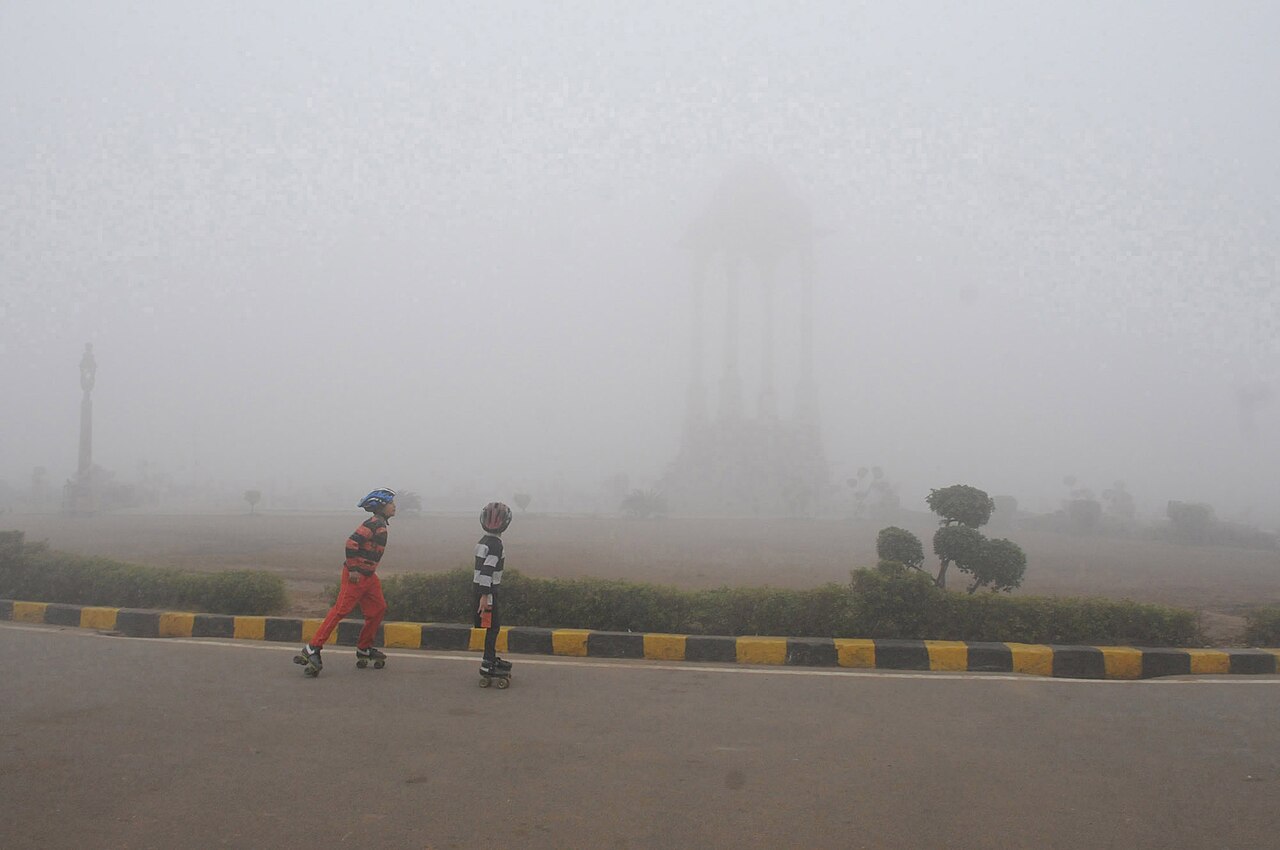
India's capital Delhi overtook Pakistan's Lahore on Friday to become the world's most polluted major city, as thick smog blanketed the city of 20 million people and visibility dropped across the capital.
The Swiss air-quality monitor IQAir put Delhi's Air Quality Index at 334, a level it classifies as "hazardous". India's Central Pollution Control Board recorded an even higher figure, an AQI of 403, and classified the air as "severe" — the first severe day of the season.
The two numbers do not contradict each other so much as measure the same crisis differently. The agencies use different scales and methods, which is why the same morning's air can carry two different labels. What neither figure leaves in doubt is the direction of travel: Delhi's official readings have risen steadily since the Diwali festival on November 8, and the capital has now reached the top of a ranking no city wants to lead.
Two readings, one choking city
For residents, the statistics arrive as a physical experience: a grey-white haze that softens buildings a few streets away, stings the eyes and catches in the throat. A first "severe" classification of the season is a recognised milestone, the point at which the annual deterioration stops being a warning and becomes the condition itself.
Lahore, Delhi's counterpart across the border in Pakistan, had topped the global ranking earlier in the week, and the two cities have traded places as weather systems move across the shared plains of northern South Asia. On Friday the weather favoured Lahore: helped by rain and shifting winds, its air improved to an AQI of about 111 to 115 in IQAir's readings and the city fell down the global ranking to around 15th.
Delhi's own numbers also eased as the day went on. IQAir's hourly readings showed the capital's AQI falling to 208 by late morning, an improvement on the early peak but still far from healthy air. For context, an AQI of up to 50 is considered good; a reading several times that level means the air remains a health concern for the general population, not only for people with existing conditions.
The episode underlines how much of the region's air-quality story is written by geography and season rather than by any single city's policies. Delhi and Lahore sit on the same broad plain, share similar winter weather patterns and face many of the same pollution sources, which is why their names recur at the top of the same table each year.
Why Delhi's winter air turns toxic
Delhi's winter smog is a recurring crisis with several causes that arrive together. Vehicle and industrial emissions provide a constant base load of pollution in one of the world's largest urban areas. Construction dust adds to it across a city that is perpetually building. And in the surrounding agricultural states, the burning of crop residue after the harvest sends smoke drifting towards the capital at exactly the time of year when the weather is least able to clear it.
That weather is the final ingredient. Cold, still winter air traps pollution close to the ground instead of dispersing it, so emissions that might be tolerable in another season accumulate day after day. The festival period adds its own contribution, through fireworks on top of the still winter conditions.
Because the causes are mixed, so are the arguments about responsibility. Farmers, drivers, builders, industry and neighbouring states all feature in the debate, and measures aimed at one source tend to be contested by those who carry its cost. What is not contested is the pattern: each winter, the same combination returns, and each winter the argument resumes.
The health cost beyond sore throats
The immediate effects of severe smog — irritated eyes, coughing, breathlessness — are well known to anyone who lives through it. Reporting on Friday also highlighted research pointing to longer-term consequences of breathing fine particulate pollution.
An umbrella review known as APEX-T2D, published ahead of World Diabetes Day on November 14, brought together evidence from 13 systematic reviews and meta-analyses covering more than 200 million participant observations. It linked long-term exposure to PM2.5 particles — the fine particulates that are a central component of the region's smog — with a 10 to 16 percent increased risk of developing type 2 diabetes. The review was co-authored by Dr Anoop Misra of Fortis C-DOC Hospital in New Delhi.
That finding reframes the smog debate. Air pollution is usually discussed as a respiratory problem, but evidence connecting it to a chronic metabolic disease affecting huge numbers of people lengthens the timescale over which dirty air does its damage. A severe day is miserable; years of elevated exposure, the research suggests, can change a population's health in ways that persist long after the haze has cleared.
For now, Delhi's residents are watching the same numbers the monitors publish. Friday's late-morning improvement offered some relief, but with the season's first severe day only just recorded and winter still to come, few in the capital will assume the worst of the smog has passed.